
In Abuja, households still struggle to maintain a healthy diet despite easing inflation trends.
Market surveys across Orange, Nyanya and Karu markets show traders keep food prices high.
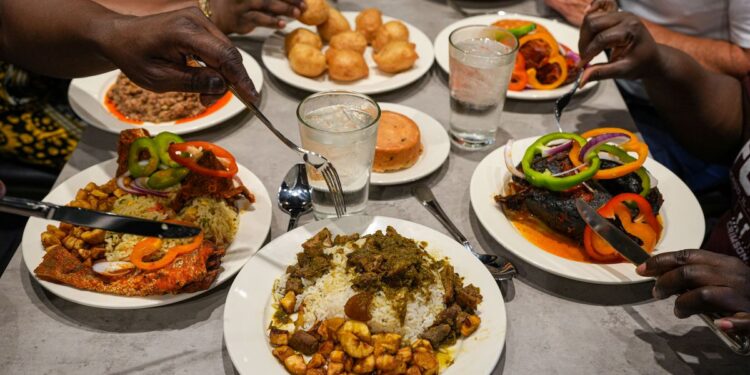
Healthy Diet Costs In Abuja
Adults now spend ₦1,500 to ₦2,000 daily on nutrition, which totals ₦45,000 to ₦60,000 monthly.
Families feel the pressure more sharply.
Households of four to five people need ₦250,000 to ₦300,000 monthly to sustain a healthy diet.
They spend ₦9,000 to ₦10,000 daily on basic food baskets.
Staples such as rice, beans, garri, eggs, beef, oil and vegetables continue driving costs upward.
Meanwhile, transport challenges, insecurity and supply disruptions push prices higher across markets.
Food Supply Chain Pressure
Economists explain that structural problems keep food prices elevated even as inflation slows.
Dr Almaroof Ojerinde states that fuel and logistics costs push up food prices for consumers.
Similarly, Dr Aisha Mohammed notes that insecurity reduces farm output and weakens supply chains nationwide.
In addition, nutrition expert Chinenye Chibuzor explains that families reduce protein, fruits and vegetables under financial pressure.
Also, trader Ibrahim Musa highlights that fuel charges, loading fees and road levies increase final retail prices.
Read Also: Honeywell Flour FY2026 Earns ₦21.9Bn, Pays 20 Kobo Dividend
Market Prices Remain High
Imported rice sells for ₦55,000 to ₦65,000 per 50kg bag, while local rice costs ₦45,000 to ₦55,000.
Likewise, beans cost ₦4,000 to ₦6,500 per paint bucket, while garri sells for ₦2,000 to ₦3,500.
Eggs trade at ₦6,000 to ₦8,500 per crate across Abuja markets consistently.
Vegetable oil costs ₦55,000 to ₦61,200 per 25-litre keg, while beef sells for ₦4,500 to ₦6,500 per kilogram.
Meanwhile, tomatoes cost ₦35,000 to ₦80,000 per basket across markets.
Pepper ranges from ₦45,000 to ₦150,000 per bag, while onions sell for ₦60,000 to ₦115,000.
Compared to May 2025, beans prices ease slightly in some markets.
However, garri prices rise sharply from under ₦1,000 to ₦3,500 per bucket.
Furthermore, civil servant Ngozi Eze says incomes no longer stretch far enough.
She adds that ₦100,000 now disappears within days of shopping for food.
Likewise, driver Sani Bello explains that rising food and fuel costs force tough trade-offs.
Finally, NBS reports inflation rises to 15.69% in April 2026 nationwide.
Food inflation stands at 16.06%, although growth slows compared with 2025.
Overall, Abuja families still face rising costs when they try to eat healthily.