

Nigerian Banks CEOs must appear before the House of Representatives after the panel summoned them.
The committee investigates allegations that banks deduct illegal charges from customers’ accounts and salaries.
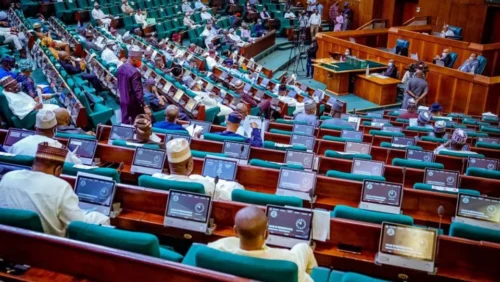
Nigerian Bank CEOs Summoned To House Panel
On Tuesday in Abuja, the House Ad-hoc Committee issued the summons, responding to mounting public concern.
Banks often deduct fees for SMS alerts, account maintenance, and transfers, sparking complaints from customers.
Allegations Of Unlawful Deductions
During the session, Committee Chairman Rep. Kelechi Nwogu accused the banks of systematically deducting funds unlawfully.
He stated, “Banks are taking inexplicable charges without proper remittance,” highlighting the urgency of the probe.
Moreover, Nwogu warned that banks must authorise all deductions, calculate them accurately, and use them correctly.
To support the investigation, the committee will collaborate with the Ministry of Finance and the Accountant-General’s Office.
Additionally, the Economic and Financial Crimes Commission (EFCC) will assist to ensure full accountability.
Importantly, Nwogu emphasised that CEOs must attend personally and cannot send representatives.
Read Also: Nigeria’s FX Inflows Plunge To $2B, 16-Month Low
The committee gave banks a four-day deadline to submit all requested documents and threatened sanctions for delays.
Next Wednesday, the CEOs will appear under oath for thorough questioning.
Businesses Struggle Amid High Fees
Furthermore, the panel will examine every deduction to uncover hidden or unlawful charges.
High bank fees, multiple taxes, and poor infrastructure continue to impede business growth.
A recent Central Bank of Nigeria survey revealed that over 70% of respondents identified these issues as major challenges.
Despite these obstacles, the report noted cautious optimism among Nigerian businesses.
Finally, Nwogu vowed that the panel will leave “no stone unturned” in exposing unjustified deductions.
This investigation represents a decisive step toward transparency and accountability in Nigeria’s banking sector.
