

Private depots in Lagos and neighbouring areas stood largely empty on Monday as the Dangote Petroleum Refinery began selling petrol directly to marketers, reshaping Nigeria’s downstream sector.
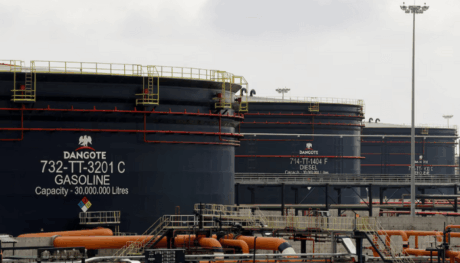
In contrast, market checks revealed minimal activity at depots, since operators paused operations and waited for the refinery’s impact on demand.
A Turning Point
Commenting on the shift, Chief Executive Officer of Petroleumprice.ng, Olatide Jeremiah, described the development as a turning point.
“Dangote is now setting the pace.
On Monday, the rollout of 1,000 trucks disrupted depot operations and pushed purchases down sharply,” he explained.
At the same time, Jeremiah pointed to an unusual trend: global oil prices climbed, yet local depot prices dropped.
He credited the refinery for driving this reversal.
“This revolution will push the industry to adopt best practices and stabilise pump prices,” he said.
Risks And Rewards
Read Also: Nigeria Business Creation Hits 3-Year Low — Report
Meanwhile, the refinery’s direct sales launch aligned with the first anniversary of its petrol rollout.
During the event, President and Chief Executive of Dangote Petroleum Refinery, Aliko Dangote, said the project had already eased decades of fuel scarcity.
“Nigerians have queued for fuel since 1975.
But from September 15, 2024, when we began petrol supply, the story changed,” he said.
Reflecting on the risks, Dangote recalled how many experts dismissed the project as too ambitious for a private company.
“If the refinery had failed, lenders would have seized our assets.
But we believed in Nigeria and Africa,” he added.
As a result, industry analysts argue the refinery now reshapes Nigeria’s fuel supply, reduces import dependence, and strengthens regional energy security.