
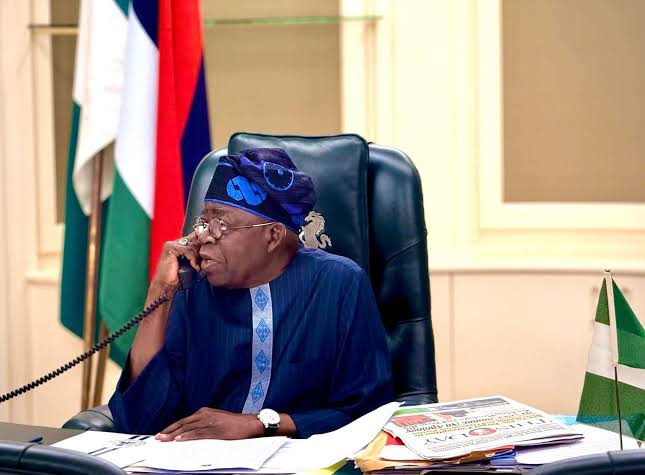
President Bola Tinubu says fuel subsidy removal saved Nigeria from imminent financial collapse in 2023.
He made the statement during a meeting with state governors at the Presidential Villa in Abuja.
 Economic Stabilisation Through Reform
Bayo Onanuga explained that governors visited to celebrate Sallah and the administration’s third anniversary.
Tinubu stressed that his administration removed the subsidy, and this painful step stabilised public finances.
He added that the policy reset government spending and reduced Nigeria’s risk of bankruptcy.
The President admitted Nigerians criticised the decision and also endured hardship after implementation began nationwide.
However, he noted that Nigeria has now passed the initial shock and continues recovering steadily.
Furthermore, he said reforms are improving agriculture, infrastructure, and housing across the country.
In addition, the government has revived abandoned road projects and launched new nationwide developments.
Tinubu praised governors for supporting reforms, despite public pressure and economic transition challenges.
As a result, many states now rely less on federal bailouts and emergency borrowing.
“I’m glad governors are no longer borrowing from the federal government,” Tinubu said.
He further stated that reforms have strengthened fiscal discipline across all levels of government.
Fiscal Pressure And Subsidy Exit
Read Also: FG Channels 67% Of Revenue Into Debt Servicing
Similarly, Vice President Kashim Shettima described subsidy removal as bold and necessary reform.
He explained that it corrected long-standing distortions in Nigeria’s fuel subsidy system.
Meanwhile, the subsidy removal remains a major reform since Tinubu assumed office in 2023.
Analysts estimate Nigeria now saves between ₦4 trillion and ₦6 trillion annually from subsidies.
In addition, FAAC allocations rose from ₦629 billion in March 2023 to ₦2.036 trillion in March 2026.
The government also stopped Central Bank “Ways and Means” financing to reduce inflation pressures.
Moreover, foreign exchange reforms unified markets but increased naira volatility nationwide.
Recovery Gains And Household Strain
However, fuel price increases and inflation raised transport, food, and household costs significantly.
Ultimately, Tinubu insists reforms created stability and a stronger foundation for economic recovery.