
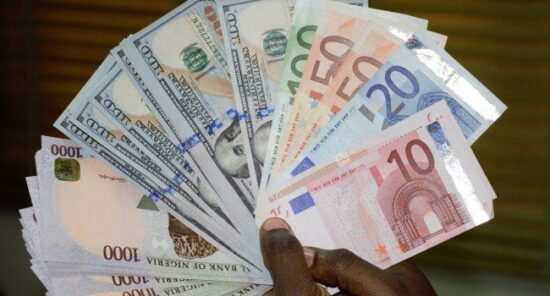
Last week, the Naira traded steadily against the Euro and closed at ₦1,591.5 per €1 after touching ₦1,599, according to the Central Bank of Nigeria.
This shift tells a different story. The Naira no longer falls sharply.
Naira Shows Steady Strength
Instead, it moves within a slower descending channel, showing reduced pressure.
The decline has eased, and the currency gains slight strength as the Euro weakens.
Market watchers upgraded the outlook from neutral to slightly positive.
Short-Term Volatility And Risks
However, the path was not smooth.
The Naira reached a quarterly high of ₦1,586 on April 2.
The Euro then rebounded slightly and pushed rates higher again.
This reminds investors that currencies rarely move in a straight line.
Looking ahead, long-term models suggest the Naira remains undervalued.
If reforms continue, the currency may record gradual gains in the next quarter.
However, risks remain.
Higher spending, rising deficits, and lower oil output could weaken the Naira.
These risks carry more weight in a pre-election year.
Read Also: Naira Falls To ₦1,387/$ In March, Wiping Out February Gains
Global Forces And Outlook
In addition, global factors continue to shape the story.
Nigeria plays a growing role in energy supply to Europe due to disruptions in Middle Eastern routes.
Tensions between the US and Iran disrupt key supply lines.
Around 40% of Europe’s jet fuel passes through the Strait of Hormuz.
Ongoing tensions push prices higher and reduce stability.
As a result, Europe seeks alternative suppliers, and Nigeria fills that gap.
A recent fuel shipment from Dangote Petroleum Refinery to the UK highlights this shift.
It shows Nigeria’s growing role in global energy supply chains.
Meanwhile, international cooperation strengthens.
The European Investment Bank commits €555 million to support Nigerian businesses.
These funds target agriculture, healthcare, and digital services.
Overall, the Naira shows quiet strength, and reforms plus global shifts support its gradual stability.