
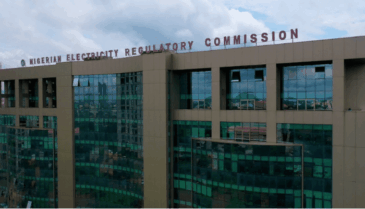
As Nigeria’s power sector undergoes reform, NERC to states: play by market rules or pay the price.
With control gradually shifting to subnational regulators, the commission warns that tariff cuts—like Enugu’s recent move—must reflect true electricity costs or be backed by state-funded subsidies to avoid destabilising the national grid.
On July 21, the Enugu Electricity Regulatory Commission (EERC) reduced Band A tariffs from ₦209 to ₦160 per kilowatt-hour, prompting backlash from distribution companies.
Full Cost Or Full Subsidy
In response, NERC clarified that state governments lack authority over the national grid or power stations operating under federal licences.
Consequently, states must adopt the full wholesale cost of grid electricity in their pricing without deviation.
Furthermore, NERC warned that any state choosing to underprice tariffs must fully subsidise the gap.
Read Also: Nigerian Passport Rises To 88th, Best In Five Years
Otherwise, such shortfalls could weaken the Nigerian Electricity Supply Industry (NESI), disrupting power generation, transmission, and the servicing of legacy debts.
Discussions Ongoing
NERC also addressed concerns raised by stakeholders over EERC’s Tariff Order (EERC/2025/003) issued to Mainpower Electricity Distribution Limited (MEDL), which depends entirely on grid power.
They criticised the new ₦160.4/kWh tariff, which emerged after EERC cut the average generation cost from ₦112.60 to ₦45.75—leaving a subsidy gap of ₦66.85 per kilowatt-hour.
Citing Section 34(1) of the Electricity Act 2023, NERC reaffirmed its legal duty to build an efficient, transparent power market.
Although EERC holds similar responsibilities, NERC emphasised that neither regulator should jeopardise the financial stability of the national grid.
Currently, NERC is holding discussions with EERC to resolve misunderstandings.
Ultimately, NERC reiterated its commitment to guiding Nigeria’s electricity market toward full cost recovery in line with federal law.