

The stalls at Balogun Market tell a story that Lagos traders have not seen in years. The imported plastic trees are still there, stacked in their dusty boxes, but the customers are walking past them. What they want now is different.
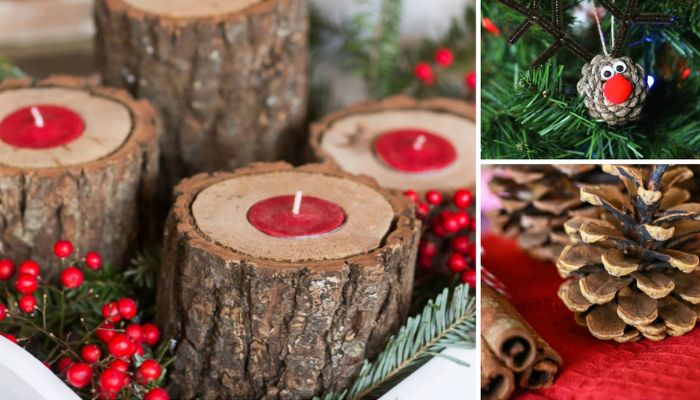
“People come in looking for imported trees, but when they hear the price, they quickly ask for the locally made versions,” says Amaka Ogechukwu, a decorator and craft seller at the Lagos market. “And when they see the creativity, they are surprised. This year, Nigerian-made decorations are saving Christmas.”
That sentence is the sound of a business opportunity opening.
The Economics of a Shift Nobody Planned
The shift did not happen because Nigerians suddenly fell in love with local craftsmanship. It happened because the naira did what the naira does.
Rising import costs and currency pressures have pushed imported festive wares beyond the reach of many households and businesses. What was once a status purchase has become a luxury. And into that gap, a new class of Nigerian producer has stepped forward — artisans making ornaments from Ankara fabric, wreaths from raffia, decorations from beads and recycled materials, and hampers built around locally sourced goods.
Michael Adedoyin, who runs a small events company in Ota, Ogun State, is one of the buyers who made the switch. “Clients want beautiful wares but their budgets can’t carry imported items anymore,” he says. “Local producers are filling the gap. The quality is improving too.”
That last sentence is the one to pay attention to. The quality is improving. This is not a charity story about buying local out of pity. It is a market story about a product that is finally good enough and cheap enough to compete.
The Hamper Business: A Case Study in Local Advantage
The hamper business is where this shift becomes most visible — and most profitable for someone starting small.
A Christmas hamper in Nigeria in 2026 costs anywhere from ₦20,000 to ₦650,000, with most sitting between ₦50,000 and ₦120,000. The median asking price across 24 listings checked in early November was ₦93,500. That is not pocket change. That is a market.
And the contents of those hampers are increasingly local. Chin chin, plantain chips, Nigerian-made biscuits, locally produced juice, palm oil, kilishi, garri. The kind of things that a family in Lagos actually wants and a family in London actually misses.
The business model is simple enough to start with ₦500,000. Mr John Okoro, who makes hamper baskets in Lagos, says that amount is enough to employ basket makers for mass production, and that the venture “can fetch millions of Naira” at the end of the seasonal sales.
The margins are real. A basket that costs ₦18,000 to fill and wrap can sell for ₦45,000 or more. Corporate orders can run from ₦45,000 to ₦350,000 per hamper.
Why Corporate Buyers Are the Real Prize
The individual buyer is nice. The corporate buyer is the business.
Banks, telecoms, oil companies, state governments — they all send hampers in December. It is a corporate culture, a way of saying thank you to clients and employees. But the economy has changed how they do it.
“People are buying Christmas hampers, but not like before because of the cost,” says Jide Omoniyi, a supermarket supervisor. “We have also reduced the quantity and quality of the content to encourage patronage.”
Reduced quantity and quality is an opening for a smaller producer who can offer something better for the same budget. A corporate buyer who used to spend ₦150,000 on an imported hamper might now have ₦80,000 to spend. If you can build a hamper that looks like it cost more than it did — using locally made baskets, local snacks, thoughtful packaging — you win that order.
And there is a timing advantage. Corporate buyers start planning in November. They need delivery by mid-December, before offices close. If you are reading this in mid-November, you are not late. You are exactly on time.
The Local Décor Angle: Beyond Hampers
The hamper is the entry point. The decoration is the expansion.
Lagos State and several local governments have started using local decorators for Christmas installations and city-wide illuminations. That is public money flowing to local producers instead of importers. And it signals something bigger: the aesthetic is changing. Nigerian-made Christmas décor is no longer a compromise. It is becoming a choice.
For someone with a skill in craft — sewing, weaving, painting, assembling — the festive season offers a window to turn that skill into income. The barriers to entry are low. The materials are available. The demand is seasonal but reliable.
What This Business Actually Requires
It requires capital, but not much. It requires taste, which is harder to teach but easier to develop than people think. It requires logistics — knowing how to get your product from your hands to a client’s office in Lekki without it arriving damaged or late.
You May Like: Senate Hospital Bill: Who Do You Jail When the Emergency Room Has No Equipment?
And it requires something that many Nigerian businesses underestimate: presentation. A hamper is not just a collection of items. It is a box that someone opens in front of colleagues. It is a photograph that ends up on Instagram. It is a message that says “we thought of you.”
The businesses that understand this will charge more and sell more. The ones that don’t will compete on price and lose.
The Window Is Open
The shift toward local festive wares is not a permanent revolution. It is a response to a currency crisis and an import bill that no longer makes sense. When the economy stabilises — whenever that is — some of this advantage may fade.
But for this December, the window is open. The demand is there. The supply is not yet saturated. And the customers are already walking past the imported trees, looking for something made here.
The question is whether anyone will be standing there to sell it to them.
