

The message arrives as a text. It says you have been selected. It asks you to follow a link, provide your bank details, and confirm your consent. If you are one of the millions of Nigerians who have been waiting for the Federal Government’s ₦100,000 family grant, that message could be the real thing. Or it could be the most expensive text you ever receive.
Here is how to tell the difference, and what the programme actually entails.
The Promise
The Federal Government announced the Nigeria Family Strengthening and Development Programme on September 10, 2026, through the Federal Ministry of Youth Development. The programme is designed to cushion the effects of economic hardship, rising food prices and the fallout from economic reforms, including the removal of fuel subsidies .
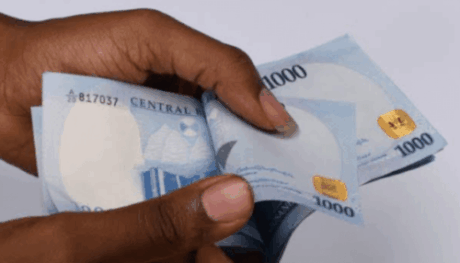
The headline figure is ₦100,000 per selected household. It is a cash transfer, not a loan. The money is meant to help vulnerable families meet essential needs and cope with the rising cost of living .
The programme is supported by the World Bank through the Hope for Indigenous Family Support Initiative, and coordinated by the Initiative’s Coordinating Office under the ministry’s mandate .
Who Qualifies
The eligibility rules are specific, and they matter.
Applicants must be Nigerian citizens by birth. They must hold a valid National Identification Number, which will be validated through the National Identity Management Commission. They must be between 18 and 65 years old at the time of registration .
But meeting those requirements does not automatically guarantee selection. The programme is targeted at poor and vulnerable households, identified through the Social Safety Net Systems and verified national identity records .
The selection process has four stages: identifying vulnerable households through the Social Safety Net System, verifying identity records through NIN, assessing households against poverty and vulnerability criteria, and selecting beneficiaries in phases across the six geopolitical zones .
That last point is crucial. The programme covers a limited number of households in each phase. Beneficiaries will not receive payments at the same time. And if you have not received a notification, the government says that does not mean you have been permanently excluded .
How to Apply
Registration is done online, at nfsp.ng/signup .
The process is free. That bears repeating: the process is free. No application fee. No facilitation fee. In fact, no agent fee. The management board has explicitly warned that Nigerians must avoid falling for scammers who claim to be agents who can fast-track or facilitate payment .
The Payment
Selected beneficiaries will receive an SMS notification from their designated payment provider. The phone number used for the notification will be drawn from the records submitted during the selection process .
Recipients must follow the instructions in the message and provide the required consent before the money is credited to the bank account they submitted .
The government has also directed enquiries to help@nfsp.ng or recognised communication channels of the Federal Ministry of Youth Development .
The Scam Warning
This is where the story becomes urgent.
The NFSP is not the first federal grant programme to attract fraudsters. A separate programme, the Nigeria for Women Program Scale-Up Project, has issued repeated scam alerts over fake links circulating on social media that falsely promise grants. The project confirmed the links were fraudulent and stressed that it charges no application fees and operates solely through official channels .
The pattern is familiar. A government announces a grant. Scammers create convincing websites, WhatsApp groups and social media pages. They ask for application fees, processing fees, or bank details. Then the money disappears.
The NFSP management’s warning is blunt: do not pay anyone to add your name to the beneficiary list. Do not pay agents to facilitate the release of your grant. Only selected beneficiaries will receive official SMS notifications from approved payment providers .
What This Actually Means
The ₦100,000 grant is real. The portal is real. The eligibility criteria are real. But the programme is not a universal payment. It is a targeted intervention for poor and vulnerable households, selected in phases, verified through national identity records, and assessed against poverty criteria.
That means millions of Nigerians who apply will not receive the money in the first phase. Some may not receive it at all, because the programme is designed to reach a limited number of households per phase, not everyone who qualifies.
The government’s own messaging acknowledges this. “If you have not received a notification, it does not necessarily mean you have been permanently excluded from the programme,” the board said . It is a sentence that offers hope and sets expectations at the same time.
The Checklist
If you are applying, here is what to do, in order.
Check your NIN. It must be valid and verified through NIMC. Without it, your application cannot proceed.
Confirm your age. You must be between 18 and 65 at the time of registration.
Register at nfsp.ng/signup. Do not use any other link, no matter how convincing it looks.
Submit accurate details. The phone number and bank account you provide will be used for notification and payment.
Did You Miss? From Awka To Abuja: Does The Peter Obi Model Scale?
Wait for an official SMS. If you are selected, you will receive a message from a designated payment provider. Follow the instructions and give consent.
Do not pay anyone. The process is free. Anyone asking for money to fast-track your application is a scammer.
Verify before you share. Before submitting your NIN or bank details, confirm you are on the official portal and not a lookalike site.
The Bigger Picture
The NFSP is part of a broader pattern of cash transfer interventions designed to soften the impact of economic reforms. It is supported by the World Bank, coordinated through a federal ministry, and delivered through a digital portal. On paper, it is a modern, targeted social protection programme.
Whether it works depends on two things: whether the money reaches the households that need it most, and whether the scammers are kept out.
The first is a question of logistics and verification. The second is a question of public vigilance. The government can build the portal, verify the NIN, and select the households. It cannot stop a scammer from sending a text that looks like the real thing.
That part is up to you.