

In April 2026, Nigerian markets delivered mild relief as staple Garri, Beans prices declined nationwide.
Shoppers experienced cheaper garri and beans, while easing pressure spread across struggling households.
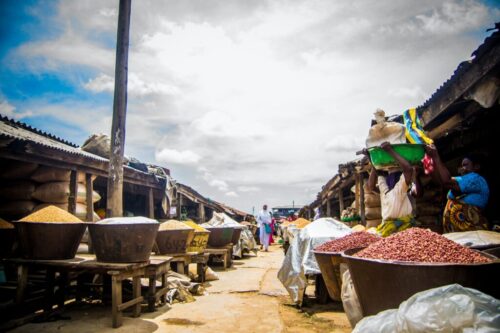 According to the National Bureau of Statistics, markets pushed white garri down by 39.86% year-on-year.
The report showed prices falling from ₦1,345.10 in April 2025 to ₦808.96 in April 2026.
However, prices still climbed 0.93% month-on-month as March levels slightly lifted demand.
Garri Price Drop Trend
Similarly, brown beans prices dropped 44.89% year-on-year across major Nigerian markets.
Traders moved prices from ₦2,429.39 in 2025 down to ₦1,338.93 in April 2026.
Yet, beans still edged up 0.99% month-on-month, as short-term pressures returned.
Beans Market Relief Pattern
Meanwhile, tomato traders sold at ₦1,177.92 per kilogram, marking an 8.23% annual fall.
Read Also: Cost Of Healthy Living Hits ₦300,000 Monthly For Abuja Families
However, tomatoes rebounded 6.60% month-on-month as demand strengthened in local markets.
Onion sellers reduced prices 22.56% year-on-year, bringing costs to ₦1,164.39 per kilogram.
In contrast, ginger prices climbed 12.30% year-on-year, reaching ₦5,581.82 per kilogram.
Tomato And Onion Price Movement
Across regions, market forces created wide price gaps driven by transport and supply conditions.
For instance, Bayelsa pushed tomato prices highest, while Plateau recorded the lowest.
Similarly, Oyo set the highest beans prices, while Taraba offered the cheapest rates.
Abia pushed garri prices highest, while Plateau markets offered the lowest.
Also, Abia led onion prices, while Nasarawa recorded the lowest market levels.
Overall, food inflation eased yearly, but markets still applied short-term price pressures.