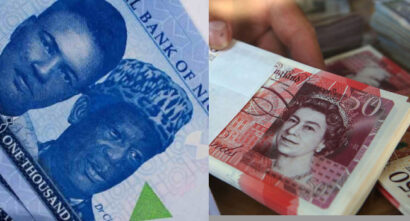

Nigeria’s foreign exchange market shows two conflicting realities, and traders describe them clearly across official and parallel channels.
The official market maintains relative stability, but the parallel market experiences rising pressure and volatility.

Official Stability Vs Parallel Market Strain
Traders and Bureau De Change operators explain that structural weaknesses drive current exchange rate instability.
They highlight persistent dollar shortages, strong demand, and rising speculation that weakens the naira.
Liquidity remains tight, especially at the retail level, where supply rarely meets end-user demand.
Although official channels receive support, traders say limited foreign exchange reaches retail operators.
This mismatch forces the parallel market to absorb excess demand and rising price pressures.
As a result, market participants increasingly hold dollars, and they expect further naira depreciation.
This behaviour reduces circulation and deepens scarcity across already strained foreign exchange channels.
Consequently, the gap between official and parallel market rates has widened in recent weeks.
The official rate trades in the mid- ₦1,300 range, while parallel rates stay higher.
This divergence reflects a worsening imbalance between formal supply and informal demand channels.
Dollar Demand And Market Behaviour
At the same time, everyday needs drive strong demand for foreign exchange across sectors.
Importers source goods, students pay tuition, patients fund treatment, and travellers seek foreign currency.
BDC operators say they struggle with inconsistent access to dollars across fragmented supply networks.
They depend heavily on diaspora remittances and private inflows, which fluctuate frequently.
This situation creates unstable supply conditions and limits their ability to meet rising demand.
Meanwhile, market uncertainty weakens confidence in the naira’s short-term outlook.
Some participants choose to hold dollars instead of selling into the official market.
Read Also: Liquidity Eases As Cash Outside Banks Falls To ₦5.20Trn
This hoarding behaviour further reduces liquidity and increases pressure in parallel markets.
Policy Pressure And Long-Term Outlook
Traders also blame fiscal pressures and weak governance for long-term currency instability.
High government spending and inefficiencies undermine investor confidence and weaken the currency.
These structural issues fuel inflation and discourage foreign investment inflows.
The Central Bank improves official supply through interventions, yet gaps persist in retail markets.
Liquidity often fails to reach end users who depend on direct foreign exchange access.
Market fragmentation continues because regulators do not fully integrate BDCs into official channels.
In response, policymakers promote short-term solutions that improve transparency and stabilise interventions.
They also encourage stronger coordination between regulators and retail operators.
However, long-term stability depends on increasing foreign exchange inflows across key sectors.
Experts emphasise oil production, non-oil exports, and foreign investment as critical drivers.
Without these reforms, pressure on the naira will continue across both markets.
For now, Nigeria’s FX system remains divided, as official stability contrasts with informal market strain.