
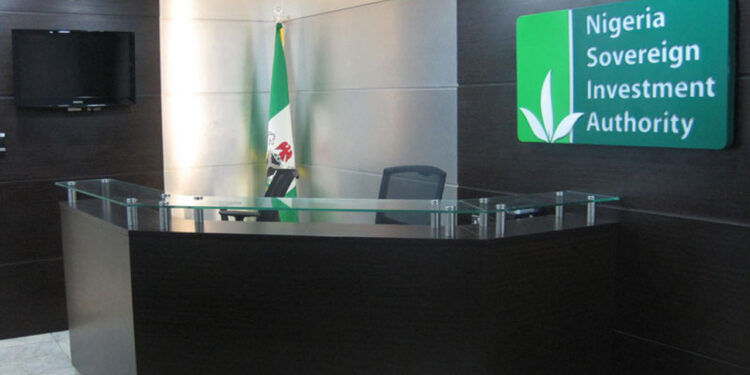
In 2025, the Nigeria Sovereign Investment Authority (NSIA) told a story of steady growth and measured ambition.
The Authority announced its assets reached $3.4 billion at its earnings presentation attended by newsmen.
Consequently, the figures showed strategy, discipline, and adaptation across changing conditions.
NSIA Asset Growth And Performance
Growth came through deliberate choices rather than sudden gains.
NSIA used dynamic asset allocation and efficient liquidity deployment.
In addition, a 35.8% rise in investment securities and stronger returns across asset classes drove momentum.
As a result, total assets increased 10.9% year-on-year, reaching ₦4.91 trillion ($3.42 billion).
Furthermore, this performance came from capital inflows and retained earnings.
₦360.8 billion in capital contributions and ₦478.8 billion in core earnings strengthened the base.
Meanwhile, net asset value increased 19.8%, from $2.8 billion in 2024 to $3.4 billion in 2025.
Core operating income also increased from ₦498.0 billion ($328.5 million) to ₦525.3 billion ($349.1 million).
Read Also: VFD Group Posts ₦14.1Bn Profit, Declares Dividend
Additionally, externally managed portfolios surged by 138%, while interest income rose by 10%.
Strategic Investments And Transition
NSIA also focused on real-world impact.
It invested in infrastructure across agriculture and healthcare.
Moreover, it completed its exit from the Presidential Fertilizer Initiative and transferred operations to MoFI.
This shift supports private sector participation and long-term sustainability.
Therefore, NSIA positions itself as a partner, not just an investor.
Digital Expansion And Future Plans
In addition, its digital plans advanced with the Kasi Cloud project, a hyperscale data centre expected to reach 32MW. Phase I will begin operations in Q2 2026.
Finally, CEO Aminu Umar-Sadiq outlined plans for the Nigeria Infrastructure Finance and Guarantee Facility (NIFGF) with the World Bank.
NSIA’s assets now exceed 3 billion dollars.
However, Nigeria’s infrastructure gap remains far larger.
Therefore, the Authority continues to mobiles partnerships and attract external capital.