

In 2025, Dangote Refinery imported $3.74 billion of crude, actively reshaping Nigeria’s oil trade dynamics.
Consequently, the country shifted from relying on crude exports and imported refined fuel towards domestic processing.
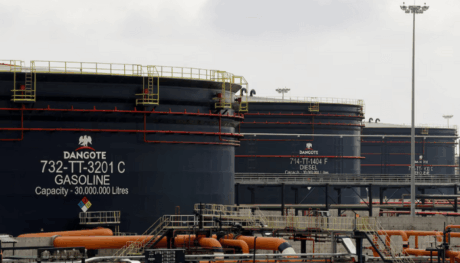
Dangote Refinery Drives Domestic Processing
Moreover, the Central Bank of Nigeria reported that these imports influenced movements in the country’s external position.
As a result, Nigeria’s current account surplus fell to $14.04 billion, down from $19.03 billion in 2024.
This decline reflected a 14.41% drop in crude export earnings, which fell to $31.54 billion last year.
Meanwhile, domestic refining helped reduce fuel import dependence, supporting economic stability and improving the goods account balance.
Specifically, fuel imports dropped sharply 28.88% to $10 billion, reflecting the growing capacity at Dangote Refinery.
At the same time, Dangote Refinery exported $5.85 billion in refined products, creating new markets and boosting earnings.
Trade And Export Growth
Additionally, non-oil imports increased 13.6% to $29.24 billion, demonstrating sustained domestic demand for foreign goods and services.
Furthermore, Nigeria raised gas exports, which diversified revenue streams beyond crude and refined petroleum products exports.
Read Also: NUPRC Approves Bidders For Nigeria Oil Licensing Round
However, net service outflows rose to $14.58 billion, driven mainly by higher transport, travel, and insurance expenditures.
Similarly, primary income outflows jumped 60.88% to $9.09 billion, as Nigeria paid more dividends and interest abroad.
Although secondary income inflows slightly declined to $23.20 billion, remittances continued to provide essential financial support.
In the financial account, Nigeria shifted from net lending of $9.65 billion to net borrowing $1.69 billion.
Moreover, portfolio investment inflows fell 48.3% to $8.04 billion, while foreign direct investment increased to $4.01 billion.
Economic Resilience And Outlook
Overall, the balance of payments remained positive at $4.23 billion, ensuring moderate economic resilience in 2025.
Consequently, external reserves rose 13.83% to $45.75 billion, strengthening Nigeria’s financial buffers against global shocks.
Ultimately, 2025 illustrates Nigeria actively moving toward self-sufficient refining and diversifying its oil export markets.
Indeed, Dangote Refinery now drives the nation’s energy transformation and shapes its long-term economic strategy.