

Less than two years into President Bola Ahmed Tinubu’s administration, one thing has become unmistakably clear: Nigeria has not been quiet.
From the moment the fuel subsidy was removed, the streets have refused to stay calm. Markets, campuses, highways, labour halls, and even the gates of government ministries have all turned into theatres of anger, frustration, and raw public dissent. Nigerians—long known for endurance—have increasingly chosen protest over patience.
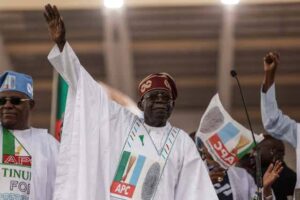
Supporters of the president argue that Tinubu inherited a broken system and is making “tough but necessary decisions.”
Critics counter that those decisions have come at a brutal cost to ordinary citizens, while the political class remains largely insulated.
Somewhere between policy reform and survival economics, the average Nigerian has been pushed to the edge.
What makes these protests particularly dangerous for any government is not just their frequency—but their symbolism.
They cut across class lines, professional groups, and regions. They expose a growing gap between official economic explanations and lived reality.
And more importantly, they raise an uncomfortable question: how long can a government govern effectively when the streets keep erupting?
Below are five major protests that have not only rattled Tinubu’s government but also reshaped the political mood of the country—whether Aso Rock admits it or not.
1. The Fuel Subsidy Removal Protests: Day One Shockwaves
Tinubu’s presidency barely began before it detonated its first political bomb.
With a single sentence—“Fuel subsidy is gone”—petrol prices skyrocketed overnight. Transport fares doubled, food prices surged, and electricity costs followed. Within days, spontaneous protests erupted in Lagos, Abuja, Ibadan, Port Harcourt, and other major cities.
Civil society groups, transport unions, and everyday Nigerians took to the streets, accusing the government of policy recklessness and lack of cushioning measures.
For many, the anger wasn’t just about fuel—it was about timing, communication, and empathy.
The government insisted the move was inevitable. Protesters insisted survival had suddenly become unaffordable.
That clash of narratives set the tone for everything that followed.
2. Labour vs Tinubu: The Minimum Wage and Cost-of-Living Uprising
As inflation climbed and the naira continued to wobble, Nigeria’s organised labour became increasingly vocal.
The Nigeria Labour Congress (NLC) and Trade Union Congress (TUC) repeatedly mobilised workers, threatening—and at times embarking on—nationwide strikes and mass protests over minimum wage, electricity tariffs, and economic hardship.
Placards reading “We Can’t Breathe” and “Hunger Is the New Policy” became common sights.
For a government that prides itself on political experience and negotiation skills, the optics were damaging: workers accusing a former labour ally of abandoning them. Even when talks resumed, distrust lingered.
Many Nigerians began asking: If workers are this angry, what about those without jobs at all?
3. #EndBadGovernance Protests: Youth Anger Finds a New Name
What #EndSARS was to the Buhari era, #EndBadGovernance has become for Tinubu’s administration.
Driven largely by young Nigerians, these protests were less structured but more emotionally charged.
They targeted rising insecurity, unemployment, perceived elite arrogance, and what protesters described as a government “out of touch with reality.”
Demonstrations broke out in pockets across the country, especially online before spilling offline. The messaging was clear: changing presidents without changing governance means nothing.
Security clampdowns, arrests, and warnings only poured more fuel on the fire, reinforcing fears that dissent was being treated as a threat rather than feedback.
4. Indigenous Contractors vs the Federal Government
When local contractors blocked the gates of the Federal Ministry of Finance in Abuja, it sent a chilling signal.
These were not political activists or student protesters—they were business owners accusing the Federal Government of owing them billions for completed projects.
Roads, buildings, and infrastructure reportedly executed, inspected, and even commissioned, yet unpaid.
The protest turned chaotic. Tempers flared. A gunshot was reportedly heard.
Beyond the drama, the message was damning: even those who work directly for the government feel cheated by it.
In a country desperate for infrastructure and job creation, unpaid contractors mean abandoned projects and lost trust.
5. Student and Education-Sector Protests: The Future Pushes Back
As tuition fees rose in some federal institutions and education funding remained uncertain, students and education workers joined the protest wave.
Demonstrations over fees, welfare, and prolonged underfunding highlighted a dangerous contradiction: a government preaching long-term economic reform while the future workforce struggles to stay in school.
For many young Nigerians, it felt like a warning sign—if education collapses, everything else follows.
The Bigger Question Tinubu’s Government Must Answer
Individually, each protest can be explained away.
Together, they tell a louder story.
They suggest a nation where economic reforms are racing ahead of social consent, where explanations are abundant but relief is scarce, and where patience—Nigeria’s most abused resource—is running dangerously low.
Tinubu may still insist that history will vindicate his policies. Protesters insist history is happening now, in empty pockets and crowded streets.
The real controversy is no longer whether Nigerians are protesting.
It is how many more protests it will take before governance begins to feel humane again.