
Nigeria’s public finances under President Bola Tinubu face growing pressure from rising debt service costs.
As a result, the government directs more resources to loan repayments each year.
Meanwhile, less money remains available for development spending.
Between 2023 and 2028, debt service spending could exceed ₦91 trillion.
This outcome follows years of heavy borrowing, weak revenue growth, and high interest rates.
Moreover, recent budgets and MTEF projections support these estimates.
Together, the figures reveal a fiscal path with narrowing policy options.
Debt Service Surge
In 2023, the government allocated ₦6.56 trillion to debt service.
However, actual spending climbed to ₦8.56 trillion.
Consequently, the government exceeded its target by about ₦2 trillion.
In 2024, the gap widened further.
That year, budgeted debt service rose from ₦8.27 trillion to ₦12.63 trillion.
Similarly, the pattern continued into 2025.
The government allocated ₦14.32 trillion for debt service this year.
By July, spending had already reached ₦9.8 trillion.
Therefore, debt service exceeded the pro-rated target of ₦8.35 trillion.
If the trend continues, spending will surpass the full-year estimate again.
Looking ahead, projections place debt service at ₦15.9 trillion in 2026.
Afterwards, costs are expected to rise to ₦19.8 trillion in 2027 and 2028.
Overall, budgeted debt service totals ₦84.6 trillion over six years.
However, past overruns suggest the final cost could exceed ₦91 trillion.
Capital Spending Squeezed
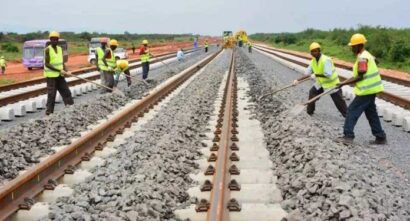
As debt service grows, capital spending faces increasing pressure.
Although the government plans ₦114.8 trillion for capital projects, reality differs.
In practice, actual releases lag far behind debt payments.
In 2023, the government spent ₦6.3 trillion on capital projects.
By contrast, debt service consumed ₦8.56 trillion that year.
In 2024, the gap widened further.
That year, debt service exceeded capital spending by ₦11.5 trillion.
In 2025, the squeeze has intensified even more.
Read Also: FG To Spend ₦6.04Bn On Ajaokuta Staff In 2026
By July, capital spending stood at just ₦3.59 trillion.
Meanwhile, the budget expected ₦13.6 trillion for the same period.
As a result, capital projects again absorb the weight of fiscal strain.
Revenue And Borrowing Strain
At the core of Nigeria’s debt challenge lies weak revenue performance.
In 2023, actual revenue slightly exceeded the budget at ₦12.48 trillion.
However, the improvement proved short-lived.
In 2024, revenue fell nearly ₦5 trillion below target.
That year, total revenue reached only ₦20.98 trillion.
Consequently, the government increased borrowing to close the gap.
Early signals for 2025 remain troubling.
By July, actual revenue reached an estimated ₦13.6 trillion.
In contrast, the budget expected ₦23.8 trillion for the same period.
If the trend continues, fiscal stress will intensify further.
At the same time, debt service costs rise alongside Nigeria’s expanding debt stock.
Domestic debt grew from ₦54.3 trillion in 2022 to ₦80.5 trillion.
Similarly, external debt increased from $41.6 billion to $46.9 billion.
As a result, repayment obligations now carry higher foreign exchange risk.
Meanwhile, borrowing costs remain elevated.
Tight monetary policy has pushed interest rates above 20%.
Therefore, interest payments on new and refinanced debt continue to rise sharply.
Overall, debt service now dominates Nigeria’s fiscal structure.
Debt payments continue to grow faster than government revenue.
Consequently, investment in infrastructure, healthcare, and education remains constrained.
Unless revenue reforms succeed, pressure on public finances will persist.
Ultimately, debt service will shape fiscal decisions throughout this administration.