

Nigeria’s transport sector entered Q3 2025 under rising pressure.
Roads bore heavy use, and ports faced long queues.
Meanwhile, ageing rail lines failed to ease delays, which continued to frustrate businesses.
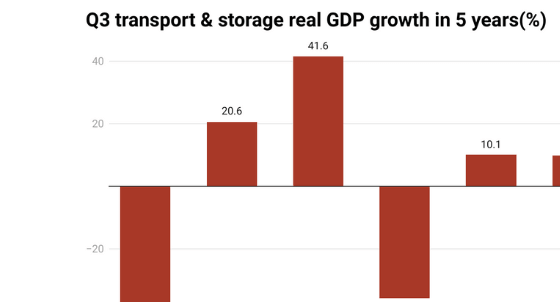
Slow Growth Amid Challenges
These issues defined the quarter and slowed sector growth.
According to NBS data, the sector grew by 9.87%, lower than 10.10% in Q3 2024.
Real growth fell 0.23 points year-on-year and dropped 12.22 points from the previous quarter.
Transport Sector Contribution To GDP
Despite the slowdown, the sector slightly increased its share of real GDP.
It reached 0.69%, above 0.65% in Q3 2024 and Q2 2025.
This gain reflected the sector’s steady, though challenged, role in the economy.
Challenges And Nominal Performance
Read Also: Lagos Tenancy Bill Brings New Guidance
The industry includes six areas: road, rail, water, air, pipelines, and courier services.
Each area faced delays, rising costs, and security threats.
Consequently, businesses experienced damaged goods and longer delivery times.
Experts argue that stronger investment and clearer policy reforms can improve efficiency.
In nominal terms, the sector grew 24.35% year-on-year in Q3 2025.
This was lower than 37.53% in Q3 2024 but higher than 13.67% in Q2 2025.
Four of six sub-sectors expanded, which drove quarter-on-quarter growth to 56.11%.
By the quarter’s end, transport contributed 0.96% to nominal GDP, exceeding 0.92% in Q3 2024 and 0.70% in Q2 2025.
Overall, the sector continues to move forward, carrying heavy operational burdens.