
Nigeria’s political landscape may have just witnessed the beginning of another dramatic power shift. Former Peter Obi has emerged as the only presidential aspirant under the banner of the Nigeria Democratic Congress (NDC) ahead of the 2027 general election.
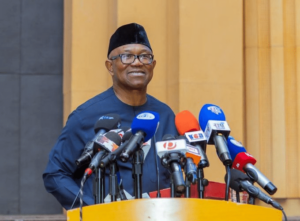
With the deadline for the purchase of Expression of Interest and Nomination Forms officially closed, party insiders confirmed that Obi was the lone figure to obtain the presidential forms, a development already sparking intense debate across Nigeria’s political circles.
A Lone Candidate or a Carefully Scripted Political Move?
For many Nigerians, the news raises a troubling but fascinating question: Is Peter Obi’s emergence a sign of overwhelming popularity within the NDC, or evidence that internal democracy in Nigerian politics is slowly fading away?
While supporters describe the development as proof of Obi’s unmatched influence and grassroots appeal, critics argue that uncontested candidacies often expose the hidden power structures operating behind party doors.
Either way, one thing is becoming clear, the NDC may already have its presidential flagbearer long before the official primaries begin.
NDC Extends Deadline for Other Aspirants
In a statement released by the party’s National Secretary, Ikenna Morgan Enekweizu, the NDC announced that while presidential forms are no longer available, aspirants seeking other political offices have been granted an additional week.
The new deadline for governorship, Senate, House of Representatives and State House of Assembly aspirants has now been extended to midnight on Sunday, May 24, 2026.
According to the party leadership, the extension is intended to allow wider participation and ensure more qualified candidates complete the process.
Screening Process Begins Amid Rising Political Tension
The party also revealed that screening and pre-qualification exercises for aspirants will begin on Tuesday, May 19, and continue until May 26.
Those cleared during the screening stage will proceed to collect and submit nomination forms between May 20 and May 26.
But beyond the official timetable lies a deeper political drama.
Inside party circles, conversations are already shifting from “Who will emerge?” to “What happens if Obi wins unopposed?”
That question alone could shape the next chapter of opposition politics in Nigeria.
The Documents, The Rules and The Pressure
The NDC directed all aspirants to appear before screening panels with complete documentation, including educational certificates, voter’s cards, birth certificates or declarations of age, passport photographs, membership cards and updated curriculum vitae.
Interestingly, every document submitted must come in six copies, a reminder of the heavy bureaucracy that still defines much of Nigeria’s political process.
The party also insisted that screening would not be based solely on popularity, but on competence, character, local realities and electability.
NDC Pushes Consensus Politics
In what many observers see as a subtle message to party members, the NDC encouraged aspirants to embrace consensus arrangements rather than divisive contests.
The party further instructed its screening committee to uphold affirmative action policies designed to support women, youths and persons living with disabilities.
Yet, despite those declarations, political analysts believe all eyes remain firmly fixed on one man — Peter Obi.
Obi’s Defection Still Sending Shockwaves
Obi’s recent move from the African Democratic Congress (ADC) to the NDC had already triggered speculation across the country.
But his emergence as the party’s sole presidential aspirant has now intensified discussions about coalition politics, opposition realignment and the battle for Nigeria’s future.
To his loyal supporters, Obi represents discipline, economic reform and a break from old political traditions.
To his critics, however, the growing political cult around him raises uncomfortable questions about whether Nigeria is replacing one form of political dominance with another.
2027 May Already Be Taking Shape
What looked like an ordinary party announcement is quickly transforming into a larger national conversation.
Can Peter Obi unite a fractured opposition?
Will Nigerians embrace another “third force” movement?
You May Like: Ghana Boosts Reserves With 30% Gold Purchase Rule
Or is the country simply watching another political cycle where elite negotiations determine outcomes long before voters step into polling units?
For now, the NDC has made one thing unmistakably clear: the road to 2027 may already have a leading actor — and his name is Peter Obi.