
It was a transition quarter for Champion Breweries Plc after it completed a major strategic acquisition.
The company reported that profit fell in Q1 2026 to ₦839.2 million, from ₦1.7 billion last year.
This drop happened because higher financing costs followed the acquisition of the Bullet brand.
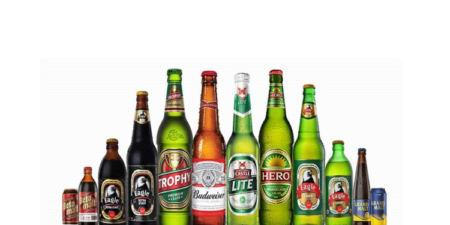
Champion Breweries Profit Drop Driven By Acquisition Costs
Management said net finance costs rose sharply to ₦2.18 billion, which pressured earnings despite stronger revenue.
The company stated, “We are in an investment phase,” while explaining the results.
At the same time, Champion Breweries drove revenue higher to ₦14.3 billion, up from ₦8.4 billion.
This growth shows that customers continued to support the business despite rising costs.
Revenue And Profit Fundamentals Remain Strong
Additionally, gross profit increased to ₦6.1 billion as the company maintained stable margins.
Operating profit also rose to ₦3.02 billion, compared with ₦1.9 billion last year.
Furthermore, the company strengthened its position by growing total assets to ₦132.4 billion.
It also improved retained earnings to ₦5.7 billion during the period.
Management clarified that Q1 reflects only early integration of the international business.
However, they expect Q2 2026 to fully reflect Bullet’s revenue and cost contributions.
Read Also: Nigeria’s Foreign Currency Tax Receipts Jump To ₦6.33 Trillion
Strategic Shift Into An International Beverage Group
Meanwhile, Chairman Imo-Abasi Jacob described the acquisition as a major transformation step.
He said, “With Bullet, we now operate as an international beverage group with Nigerian roots.”
The company acquired Bullet’s trademarks, formulations, and commercial rights across multiple markets.
It now distributes the brand in 14 African countries across key beverage segments.
Importantly, Champion Breweries now earns part of its revenue in euros and other hard currencies.
As a result, the company reduces exposure to foreign exchange volatility.
In April 2026, the company listed 2.38 billion new shares on the Nigerian Exchange.
This move increased total share capital to 11.32 billion shares and strengthened its balance sheet.
Finally, management said these actions position the company for stronger long-term growth.