
President Bola Tinubu’s renewed push for tax compliance has reopened a familiar but uncomfortable national question: what exactly is the government’s priority—raising revenue from struggling citizens or fixing the insecurity that continues to define daily life across Nigeria?

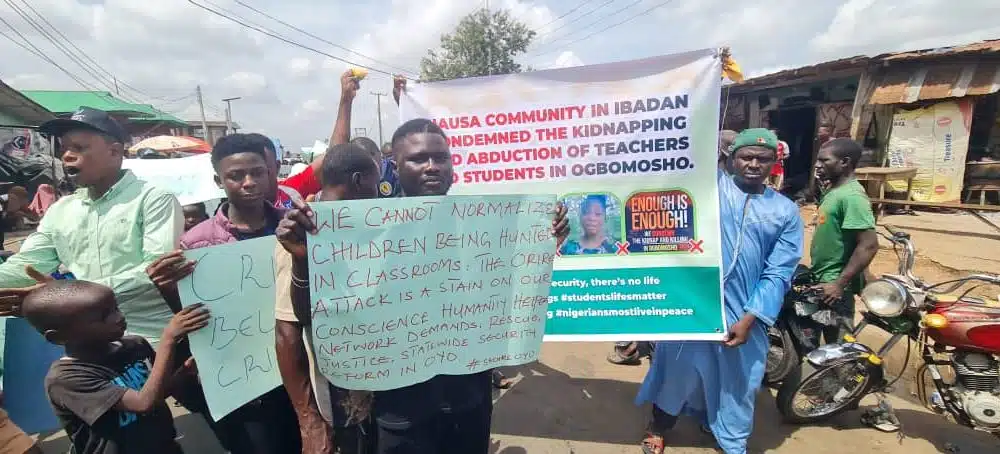
At a time when kidnappings, bandit attacks, school invasions and rural violence dominate headlines, the President’s message from the Federal Capital Territory has shifted attention to taxation, civic responsibility and national revenue generation. For many Nigerians, however, the timing has triggered deeper questions about governance priorities in a country still battling fear and economic strain.
A Tax Message in a Climate of Insecurity
Speaking at a recent infrastructure commissioning in Abuja, Tinubu urged Nigerians and corporate organisations to improve tax compliance, arguing that national development depends on collective contributions.
His position is straightforward: roads, hospitals, schools and bridges are funded by public revenue, and without adequate tax compliance, government cannot sustain development.
But for many observers, the message lands in a very different national mood—one shaped by insecurity that has disrupted farming, education, transportation and everyday life.
Across several states, communities continue to grapple with kidnappings and armed attacks, while families in some regions live under constant threat of violence. Against this backdrop, critics argue that taxation becomes a harder sell when safety itself feels uncertain.
The Uncomfortable Public Perception Gap
This is where the debate becomes politically sensitive.
On one hand, no functioning state can build infrastructure without revenue. On the other, citizens often expect security to be the first and most visible responsibility of government before fiscal demands are intensified.
The tension is not necessarily about whether taxes are necessary, but whether citizens feel the state is providing enough protection to justify stronger compliance expectations.
For many Nigerians, the perception gap is widening: they are being asked to contribute more, while still feeling exposed to insecurity that affects livelihoods and economic survival.
Critics Ask: What Comes First—Security or Revenue?
Opposition voices, including prominent political figures, have repeatedly questioned whether rising revenue figures are translating into improved living conditions.
The argument is simple but powerful: if government earnings are increasing, why do insecurity, inflation and cost-of-living pressures remain so dominant in daily life?
This line of questioning has now merged into the tax debate, with critics suggesting that compliance campaigns may be more effective if paired with visible improvements in safety and welfare.
In their view, taxation cannot be separated from trust—and trust is heavily influenced by how secure citizens feel.
Government’s Position: Development Needs Funding
From the government’s standpoint, however, the logic is different.
Officials argue that insecurity itself requires funding—better intelligence, equipment, logistics and recruitment all depend on revenue. In that sense, taxation is not separate from security but part of the same ecosystem of governance.
The administration also insists that infrastructure expansion is already ongoing, pointing to road projects and urban development initiatives as evidence of fiscal deployment.
The Core Question Nigeria Keeps Returning To
At the heart of the debate is a recurring national dilemma:
Should citizens prioritise compliance with state demands when they feel the state is still struggling to guarantee safety?
Or should government revenue drives be seen as the foundation that ultimately enables stronger security and development?
The controversy around Tinubu’s tax messaging reflects a broader frustration in Nigeria’s political economy—where citizens are often asked to contribute more into a system they feel is still underperforming in key areas of protection and welfare.
Conclusion: A Debate Far Bigger Than Tax
Ultimately, the question raised by this moment is not simply about taxation. It is about trust, governance priorities, and the social contract between the state and its citizens.
You May Like: Kenneth Okonkwo Publishes Alleged Receipts, Renews Attack on Peter Obi
Whether Nigeria is moving toward stronger fiscal discipline or simply shifting pressure onto already burdened citizens will depend not only on revenue policies—but on how convincingly the state can demonstrate that security and welfare are improving alongside its call for compliance.