

When President Bola Tinubu ordered steps to bring nearly 300 Nigerians imprisoned in Ethiopia back home, many Nigerians celebrated the announcement.
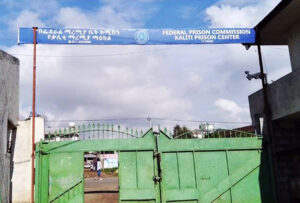
But beyond the politics, diplomacy, and government paperwork lies a deeper question: What exactly is Kaliti Prison?
For years, the name has appeared quietly in diplomatic reports, human rights complaints, and desperate phone calls from inmates stranded thousands of kilometres away from home. Yet for most Nigerians, Kaliti remains a mystery.
Until now.
A Prison Most Nigerians Never Knew Existed
Imagine waking up every morning in a foreign country where you barely understand the language.
Your family is thousands of kilometres away.
Nobody visits.
Nobody sends food.
Nobody can easily check on you.
Now imagine spending years in that situation.
That is the reality many Nigerians have faced inside Kaliti Prison, one of Ethiopia’s largest and most controversial correctional facilities.
Located on the outskirts of Addis Ababa, Ethiopia’s capital city, Kaliti is not just another prison. It has become a symbol of punishment, isolation, and survival for thousands of inmates from different countries.
For hundreds of Nigerians locked behind its walls, Kaliti is where dreams ended and reality began.
From “I Want to Travel” to “I Can’t Come Home”
Many Nigerians currently serving sentences in Ethiopia did not leave Nigeria planning to end up in prison.
Some were arrested for drug-related offences.
Others became involved in illegal migration networks.
A few insist they were victims of circumstances beyond their control.
Whatever their stories may be, the outcome was the same.
One day they boarded an aircraft believing they were travelling toward opportunity.
The next chapter of their lives unfolded behind prison walls.
It is a familiar Nigerian story.
A young man leaves Lagos, Onitsha, Aba, Kano or Benin City hoping to “make it.”
Family members contribute money.
Neighbours gather to pray.
Friends organise send-off parties.
Then one phone call changes everything.
“He has been arrested abroad.”
Suddenly, the dream becomes a nightmare.
The Reputation of Kaliti
Over the years, Kaliti Prison has attracted criticism from human rights organisations and former inmates.
Reports have described overcrowded cells, poor healthcare, limited food supplies, and difficult living conditions.
Former prisoners have spoken about the psychological burden of being incarcerated far away from family support systems.
Unlike inmates serving sentences in their home countries, foreign prisoners often face an additional punishment: loneliness.
A Nigerian inmate in Lagos may still receive visits from relatives.
An inmate in Kaliti often has no such luxury.
Birthdays pass.
Children grow up.
Parents die.
Life moves on.
The prison walls remain.
The Forgotten Nigerians
Perhaps the most painful part of the Kaliti story is how easily people forget those inside.
Back home, headlines come and go.
Politicians change.
Fuel prices rise.
Football matches dominate conversations.
Social media finds a new topic every week.
Meanwhile, somewhere in Ethiopia, a Nigerian prisoner wakes up and realises he has spent another year staring at the same walls.
The world outside has moved on.
His has not.
This is why the recent move by the Nigerian government has generated so much attention.
For many inmates, it may represent the first real hope of seeing home again.
Not freedom.
Not immediate release.
But home.
And sometimes, home means everything.
The Debate Nigerians Must Have
The proposal to transfer prisoners back to Nigeria has sparked mixed reactions.
Some Nigerians argue that those convicted abroad must face the consequences of their actions.
Others believe that regardless of their crimes, Nigerian citizens deserve humane treatment and the opportunity to serve their sentences closer to their families.
It is a difficult conversation.
After all, should a Nigerian stop being Nigeria’s responsibility simply because they made a terrible decision?
Or does citizenship carry obligations that remain even after conviction?
There are no easy answers.
But the debate forces us to confront uncomfortable truths about migration, desperation, poverty, and the risks many young Nigerians take in pursuit of a better life.
A Prison, A Warning, A Lesson
Kaliti Prison is more than a correctional facility.
It is a warning.
A warning about the dangers of shortcuts.
A warning about international crime.
A warning about the promises made by traffickers, smugglers, and criminal networks that prey on desperate young Africans.
Every cell inside Kaliti contains a story.
Some are stories of greed.
Some are stories of bad choices.
Some are stories of manipulation.
Some are stories of sheer desperation.
But nearly all of them begin with hope.
And that may be the greatest tragedy of all.
Because somewhere between Nigeria and Ethiopia, between ambition and reality, between dreams and prison bars, hundreds of lives took a turn nobody imagined.
Did You Miss? Hidden Number Plates? Police Warn Motorists Of Immediate Seizure
Today, as discussions continue about bringing Nigerian inmates home, Kaliti Prison is no longer just an Ethiopian prison.
It has become a mirror.
And what it reflects is a question every Nigerian should ask: How many young people are still boarding flights today, chasing opportunities, without fully understanding where that journey could end?