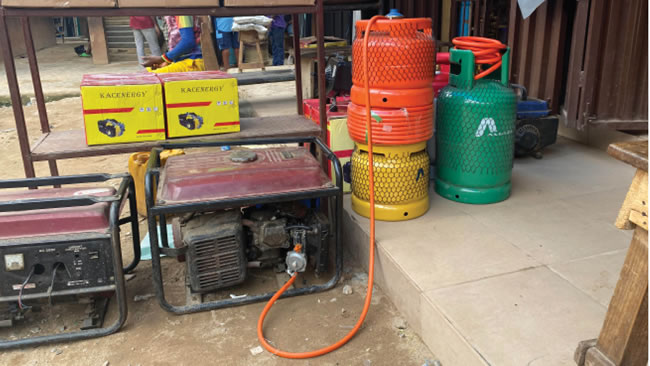

If you’ve recently tried to refill your cooking gas and walked out of the shop feeling like you just paid school fees for a private university in London, you’re not alone.

One minute you’re budgeting ₦1,200 per kilogram, the next minute you’re hearing figures like ₦1,800 or even ₦2,000 per kilogram, and suddenly, even boiling water starts feeling like a luxury decision.
At this point, many Nigerian households are not just cooking food anymore… they are “strategically planning meals based on fuel economics.”
So while marketers debate supply, demand, and seasonal pressure, ordinary Nigerians are asking a more urgent question: “Abeg, wetin we go cook with now?”
Here are 5 cheaper alternatives Nigerians are already turning to, or should seriously consider before cooking gas finishes emotionally and financially draining them.
1. Charcoal (a.k.a. “Black Gold”)
Charcoal has quietly made a comeback like an old Nigerian musician dropping a surprise hit album.
Despite all the talk about modern cooking energy, charcoal is still one of the most reliable alternatives when gas decides to misbehave.
It doesn’t need NEPA, it doesn’t need fuel subsidy, and it doesn’t suddenly “finish in the cylinder.”
Many households are now pairing it with a small stove and treating it like a backup generator for cooking.
The only downside?
Your neighbours will always know what you’re cooking… because the smell will announce it before you even taste it.
But at this point, affordability wins over aesthetics.
2. Kerosene Stove (the comeback nobody asked for… but here we are)
Remember kerosene stove? The one that used to behave like it had attitude, refusing to ignite when you’re already late for school or work?
Yes, that one.
With gas prices rising, kerosene is slowly creeping back into kitchens like an old roommate who said they were “just passing through.”
It’s still relatively cheaper in some areas, and for many households, it remains a practical fallback.
3. Electric Cooker / Induction Cooker (if NEPA permits)
In theory, electricity is the cleanest and easiest alternative.
In reality, Nigerians have learned to treat NEPA like a “sometimes relationship.”
However, for those living in areas with relatively stable power, or those with solar setups, electric cookers and induction plates are becoming a serious option.
They are fast, clean, and don’t involve smoke therapy sessions like charcoal.
But the real question is not “can it cook?”
The real question is: “Will light stay?”
4. Firewood (the original Nigerian kitchen assistant)
Before gas, before kerosene, before electricity arguments… there was firewood.
And it is still very much alive, especially in rural areas and even some urban outskirts where people have accepted that modern life is optional, but food is not.
Firewood is cheap, accessible, and reliable.
But it comes with its own “package”: smoke, environmental concerns, and neighbours who will start wondering if you’re hosting a traditional feast every evening.
Still, when prices are biting, tradition suddenly starts looking like a financial strategy.
Cooking Smarter
Sometimes the solution is not changing the energy source, but changing the cooking habits.
Many households are now:
Cooking in bulk to reduce daily gas usage
Using thermos cooking (letting food finish cooking off heat)
Pressure cooking to shorten cooking time
Prepping meals to avoid repeated boiling and reheating
It may not sound glamorous, but neither does spending half your salary on gas.
In fact, this is where Nigerian survival creativity shines the most.
You May Like: United Capital Expands Investment Banking Into Ethiopia
Because if there is one thing Nigerians know how to do well, it is adapting under pressure… especially financial pressure.
When Cooking Becomes Economics
Cooking gas was supposed to make life easier. Cleaner. Faster. More modern.
But in today’s reality, it has also become something else:
A daily reminder that energy costs are no longer just utility expenses, they are household negotiations.
So whether you’re going back to charcoal, dusting off your kerosene stove, or praying NEPA shows love this week, one thing is clear: Nigerians will always cook.
The only thing that keeps changing is how much it costs to survive the cooking.
And as the price of gas keeps shifting like exchange rates, one question remains hanging in the air: At what point does “modern cooking” stop being modern… and start becoming luxury?