
President Bola Ahmed Tinubu has declared that powerful interests benefiting from Nigeria’s old economic structure are furious over his reforms and would rather see him removed than allow the system to change.
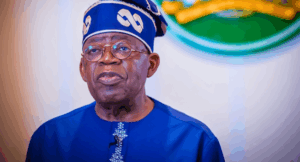
Speaking through former Ogun State governor, Olusegun Osoba, the President revealed that some entrenched groups were allegedly plotting to destabilise the country because his administration ended fuel subsidy payments and dismantled the multiple exchange rate regime.
The explosive revelation came during the launch of the book, The NADECO Story, in Lagos on Wednesday.
“They Benefited From Nigeria’s Pain”
The atmosphere at the event was celebratory at first.
Veterans of Nigeria’s democracy struggle gathered to remember the sacrifices made during the dark military era between 1994 and 1998.
But behind the applause and tributes was a deeper political message, one that painted a picture of a President locked in a fierce battle against powerful economic forces.
According to Osoba, Tinubu believes the individuals who previously profited from foreign exchange manipulation and controversial subsidy deals are now angry because the “easy money” era has ended.
“Those cabals who are doing round-tripping will wish him dead any time,” Osoba said while delivering Tinubu’s remarks.
The statement instantly shifted the mood of the gathering.
It was no longer just a democracy celebration.
It became a warning.
The Battle Tinubu Says He Cannot Avoid
Since assuming office in 2023, Tinubu has pushed two of the most controversial policies in recent Nigerian history.
First came the removal of petrol subsidy.
Then followed the unification of the foreign exchange market.
Both decisions triggered immediate economic shockwaves across the country.
Transport costs skyrocketed.
Food prices surged.
Millions of Nigerians suddenly found survival far more difficult.
Yet, the government insists the painful reforms were necessary to stop decades of economic leakage and corruption.
Tinubu now appears determined to frame the resistance against his administration as a fight between reform and entrenched interests.
According to Osoba, the President sees the current pressure on his government as the backlash of disrupting a system that made a few individuals extremely wealthy while ordinary Nigerians suffered.
“I Will Rearrange This Economy No Matter What”
Despite growing criticism, Tinubu reportedly said he has no plans to retreat.
Osoba quoted the President as saying he remains fully committed to restructuring Nigeria’s economy regardless of the political consequences.
The message was defiant.
Almost confrontational.
Tinubu reportedly believes history will eventually vindicate his decisions, even if many Nigerians currently feel frustrated by the hardship.
The President also claimed that his foreign exchange reforms are already producing visible results.
According to him, the gap between the official exchange rate and the parallel market has narrowed significantly.
He argued that contrary to predictions from critics, the naira has not collapsed to ₦2,000 per dollar.
Instead, he noted that it now trades around ₦1,380 to the dollar.
Interestingly, Osoba revealed that Tinubu does not even want the naira to become “too strong” too quickly, warning that sudden currency shifts could create confusion for investors and importers.
Security Fears Move Closer To Home
Beyond the economy, Tinubu reportedly expressed deep concern about Nigeria’s worsening security situation.
More troubling, according to Osoba, is the gradual spread of insecurity into the South-West, a region long considered relatively safer compared to other parts of the country.
That concern may explain why the President described security and the economy as the two biggest battles currently facing his administration.
For many observers, however, the connection between both crises is impossible to ignore.
As hardship increases, tension naturally follows.
And when citizens lose hope, instability often grows.
Tinubu Already Looking Beyond 2027?
In what many may interpret as an early political signal, Tinubu also hinted strongly about seeking a second term in office.
According to Osoba, the President promised that if re-elected, he would begin implementing several political reforms long demanded by pro-democracy activists and NADECO veterans.
That statement is already likely to spark debate across the political landscape.
Critics may question why such reforms must wait until a second term.
Supporters, however, may argue that stabilising the economy first is necessary before deeper political restructuring can happen.
Either way, the message was clear: Tinubu is already thinking beyond the immediate crisis.
Democracy Heroes Gather In Lagos
The event attracted several prominent Nigerians who played major roles in Nigeria’s democratic journey.
Among them were Nobel Laureate Wole Soyinka, legal icon Olisa Agbakoba, actress Joke Silva and veteran publisher Sam Amuka.
Traditional rulers, activists, academics and former political leaders also attended the gathering.
Yet, despite the distinguished audience, it was Tinubu’s chilling warning about “cabals” and economic sabotage that dominated conversations long after the event ended.
Reform Or Political Gamble?
The bigger question now remains unavoidable.
Are Tinubu’s reforms truly laying the foundation for a stronger Nigeria?
Or are ordinary Nigerians being asked to endure unbearable suffering while political elites continue to negotiate power behind closed doors?
You May Like: Kumbulla: Yamal Always a Second Ahead as Comparison With Mbappe Made
For supporters, Tinubu is confronting a dangerous system previous leaders were too afraid to touch.
For critics, the reforms may appear bold on paper but devastating in reality.
One thing is certain: Nigeria’s economic war is no longer hidden.
And Tinubu has made it clear that he believes powerful enemies are fighting back.