
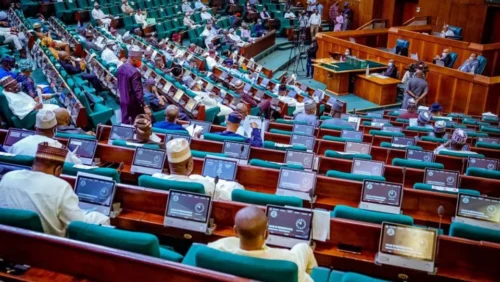
Nigeria’s treaties are now under close scrutiny, as the House of Representatives begins a far-reaching review.
At the same time, lawmakers say the process could reshape how the country manages its international commitments.
Treaties Oversight Returns To The Spotlight
First, they are examining every bilateral and multilateral agreement signed in Nigeria’s name.
In doing so, they aim to protect national sovereignty and public assets.
In Abuja, chairman of the House Committee on Treaties, Rabiu Yusuf, announced the move.
He explained that concerns have grown about the long-term costs of some agreements.
Closing The Oversight Gaps
Over the years, Yusuf said, governments signed many treaties without proper parliamentary oversight.
As a result, authorities failed to domesticate or monitor some agreements.
“Our duty is to ensure every agreement serves Nigeria’s national interest,” he said.
Importantly, he stressed that the exercise remains preventive, not political.
Next, the committee will identify legal, financial and security risks.
Read Also: EFCC Seizes $3.4M, €280K Fake Cash In Osun, Lagos
Specifically, it will examine sovereignty waivers, hidden obligations and unfavourable arbitration clauses.
Drawing The National Line
Meanwhile, lawmakers will scrutinise foreign-funded infrastructure projects.
They will assess loan terms, value for money and project delivery.
In addition, they will check compliance with labour, local content and environmental standards.
Therefore, agencies must cooperate or face sanctions.
To strengthen oversight, the review will enforce Section 12 of the 1999 Constitution.
This provision requires National Assembly approval before treaties become legally binding.
At this moment, the timing matters as Nigeria deepens global engagement.
Recently, the country signed energy and trade agreements with Brazil.
Similarly, Nigeria finalised an air services agreement with Trinidad and Tobago.
Beyond that, it expanded energy cooperation through deals with Algeria and Niger.
However, some agreements have sparked public debate.
For example, a tax cooperation deal with France raised concerns over transparency and data sovereignty.
Ultimately, lawmakers say the review draws a clear line.
In their view, international engagement must not weaken national control or future stability.