

Food prices in Abuja’s markets are dropping on paper, but life tells a different story.
At Orange Market, traders display baskets of tomatoes and peppers.
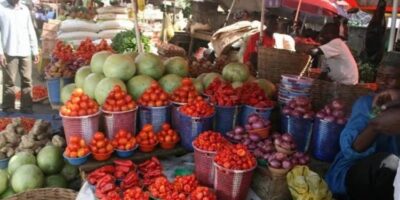
Although prices fall slightly, shoppers remain anxious. Tomatoes now sell for ₦5,000–₦6,500, down from ₦7,500.
Meanwhile, pepper has dropped sharply from ₦3,000 to ₦1,500 per basket.
However, not all goods follow the same trend.
Onions have risen slightly to ₦4,500, while certain peppers climbed to ₦5,500.
Similarly, Lugbe Market shows mixed trends.
Traders sell tomatoes for ₦9,000, onions for ₦6,500, and a mudu of beans for ₦1,800.
Moreover, Big Bull rice dropped from ₦95,000 to ₦55,000, Optimum rice from ₦65,000 to ₦56,000, and five medium yams now cost ₦8,000, down from ₦15,000.
Shoppers Feel Food Prices Strain
In Nyanya Market, onions fell from ₦6,000 to ₦3,500–₦4,500 per basket.
Tomatoes sell for ₦3,500–₦5,000 depending on size and freshness.
Consequently, shoppers weigh each purchase carefully because rent, school fees, and transport consume most of their income.
For example, a nurse and mother, Agnes Edoh, says: “Even with reductions, there is little left for food after bills.”
Read Also: Lagos State Launches ₦200B Bond To Attract Investors
Similarly, civil servant John Okeke asks: “Are fuel or transport costs down too? Without rising incomes, cheaper food means little.”
Government Action Vs Reality
The government credits local production and subsidised fertilisers for easing costs.
In addition, dry-season farming initiatives have improved supply in some areas.
Nevertheless, analysts warn households will feel little benefit without salary growth or welfare support.
Dr. Tunde Akinsola explains that households’ purchasing power has not improved.
Likewise, Ibrahim Anas notes Abuja’s living costs remain high, while wages stay far too low.
Nigeria’s headline inflation slowed to 18.02% in September from 20.12%.
Food inflation fell to 16.87% year-on-year, down from 37.77% in 2024.
Still, in Orange, Lugbe, and Nyanya, many residents struggle daily.
Therefore, behind the statistics, the story is clear: prices may fall, but survival remains hard.