

Gas prices are climbing sharply, turning cooking gas from a basic necessity into a luxury for many Nigerian families.
In Mararaba, Abuja, food vendor Mrs Esther Okwo struggles to keep her small business running.
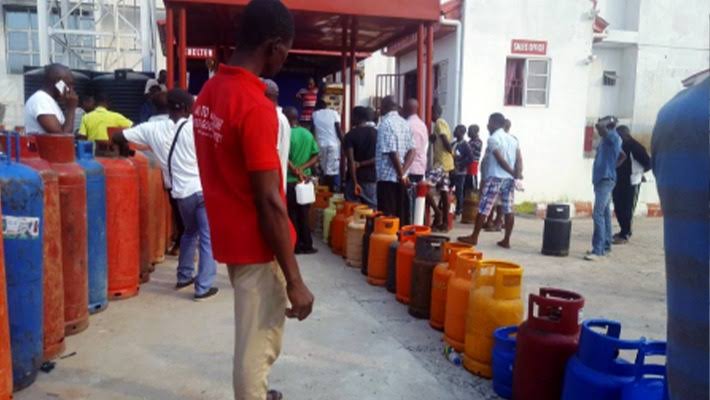
“I tried charcoal, but even that is becoming expensive,” she sighs.
Similarly, Ms Blessing in Gwarimpa recently paid ₦18,125 to refill her 12.5kg cylinder, up from ₦15,000.
“If I raise prices, customers will leave.
Profit margins are disappearing,” she added.
Ordinary households feel the impact too.
Gas Prices Bite Households
For instance, Mr Yusuf Abdul in Nyanya recalls filling a cylinder for ₦8,500 last year.
“Now it costs ₦15,000.
How are ordinary people supposed to survive this?” he asked.
Retailers Struggle With Costs
Across Abuja, vendors now sell a 12.5kg cylinder for ₦15,000–₦16,500.
Meanwhile, in Lagos, prices fluctuate between ₦1,100 and ₦1,500 per kilogram.
Retailers blame rising depot and transport costs.
Mr Peter Ogar, a Nyanya retailer, explained, “If I buy gas at ₦1,000 per kilogram, I cannot sell it at that price.”
Experts Warn On Clean Energy
Read Also: Lodging Demand Drives 50% Revenue Jump For Hospitality Firms
Experts warn that the surge threatens Nigeria’s clean energy transition.
The government aims to have 30 million households adopt clean cooking fuels by 2030.
Dr Bala Zakka called the situation “a failure of gas policy,” while Dr Nnimmo Brimah highlighted Nigeria’s over-reliance on imported LPG.
In addition, Mrs Adaobi Okonkwo pointed out that subsidy removals and foreign exchange costs make LPG unaffordable.
The government promises action.
Minister Ekperikpe Ekpo ordered authorities to clamp down on hoarders after refinery strikes and NLNG maintenance limited supply.
Nigeria’s Energy Transition Plan seeks net-zero emissions by 2060.
Experts warn that without affordable access, clean energy becomes a privilege for the rich.
“The government must treat this as a public health and environmental emergency,” Dr Brimah urged.
Until households see stable prices and increased local gas production, millions of Nigerians will struggle, and the country’s clean energy dream may remain just that — a dream.
Key Facts
- Energy Transition Plan requires $1.9 trillion by 2060.
- $10 billion needed annually, per President Tinubu.
- $17.7 billion yearly required to meet NDC targets.