

On August 26, 2025, President Bola Tinubu issued an immediate and temporary ban on the export of raw shea nuts—catching the agricultural sector off guard and igniting spirited debate.
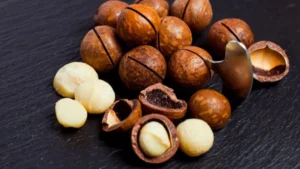
The directive, made public by Agriculture Minister Sen. Abubakar Kyari at the Presidential Villa, signals a bold bid to recalibrate Nigeria’s presence in the global agro‑economy.
But beyond headlines and market ripples, this ban may be a strategic pivot teeming with benefit—echoing a narrative of transformation, empowerment, and economic sovereignty.
1. From Raw Nuts To Global Gold: The Value-Add Shift
Nigeria produces an astounding ~263,000 tonnes of shea nuts per year—a staggering figure that remains largely unprocessed internally.
Echoing Vision 2030, the current administration is amplifying push for local processing to deepen value chains.
This isn’t uncharted territory. The National Export Promotion Council (NEPC) already spearheaded the Shea Export Development Project (2022–2025), aiming to transition Nigeria from exporter of raw nuts to globally competitive shea‑butter innovators.
Tinubu’s ban could be turbocharging this project—forcing the hand of industry to invest in domestic processing capacities.
2. A Moral Quandary With Economic Salvation
Polarising? Undeniably. Many decry the sudden ban as disruptive to farmers and traders accustomed to cashing in on raw exports.
But beneath that discomfort lies a higher-purpose bet: worthless scraps in crates turn into products of premium worth—by way of creams, cosmetics, and health supplements adored in international markets.
This push for local refinement isn’t speculative. The Senate has backed a bill mandating a minimum 30% processing rate before any raw export—coupled with stiff penalties for non-compliance.
Pair that with a prevailing consensus: exporting raw goods yields minimal returns on the global stage; value-added exports hold exponential rewards.
3. Weaving Stories: A Village, A Vision, A Vanishing Opportunity
Imagine Mamuda, a mother of five in northern Nigeria. She spends her days collecting shea nuts—her family’s lifeline, transported to traders and sold to benefit processors abroad.
Now, under the ban, her paydays are delayed, and uncertainty looms.
But then a cooperative arrives—equipping her community with a rudimentary processing facility, jobs follow. Shea paste is refined on-site and sold at multiples of raw nut prices.
Her children attend school; she invests in solar lighting; she dreams bigger.
This isn’t fantasy—it’s the narrative Nigeria craves, and can now tell.
4. Why The Shea Nut Matters More Than You Think
$500 million potential: As far back as 2013, analysts posited that with quality improvements and local processing, shea could yield over half a billion dollars annually in revenue.
Also Read: ECOWAS Unveils 260,000-Troop Rapid Response Force
Curbing smuggling, reclaiming value: Previously, a chunk of Nigeria’s shea nuts was clandestinely funneled to neighboring nations—processed there, profit shared—draining our potential.
Strategic alignment: This ban complements Tinubu’s broader “Nigeria First” policy—prioritizing local industries, curbing unnecessary imports, and safeguarding domestic value chains.
Export Identity, Not Just Output: The true winners on the global stage aren’t raw-material states—they’re processors.
Think of DRC with cobalt, cocoa-bean exporters eclipsed by chocolate giants. Same story for shea.
5. A Hot Debate: Displacement Or Development?
Voices from farmers to urban entrepreneurs weigh in:
The skeptic: Local processors might dictate prices—leaving farmers squeezed while value accrues to facilities, not fields.
The optimist: If regulators and development financiers step in, they can help build fair, profitable value chains that lift entire rural communities.
It’s a moral tightrope: Should farmers bear industrial burdens, or should the state cushion that pivot?
A Nut That Tells A Nation’s Story
This isn’t just about nuts. It’s a metaphor for Nigeria’s rebirth—an economy reclaiming its worth, anchoring prosperity at home, and daring to dream in chocolate, cosmetics, and commerce—not merely in exports.
The question stands: Will this ban birth a refinery-rich, empowered tomorrow—or will the promise slip through cracks of poor implementation and short-term politics?