
If someone had told us that the most radical challenge to Nigeria’s national institutions in 2024 would come in the form of a woman’s skirt, we’d have laughed, asked for suya, and moved on.
But here we are.
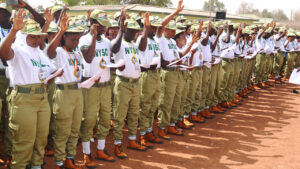
In a ruling that stunned both state and society, a Federal High Court declared that the National Youth Service Corps (NYSC) violated constitutional rights by forcing female corps members to wear trousers, effectively banning skirts.
The court not only slammed the policy but ordered NYSC to issue certificates to women previously denied discharge because they wore skirts for religious reasons.
A skirt. One piece of fabric. And now, the entire structure of national dress codes is shaking.
Not Just A Garment — A Declaration Of Identity
This isn’t just about aesthetics. The skirt represents something bigger: a woman’s right to religious expression, bodily autonomy, and cultural identity — all while serving the nation.
You see, the NYSC uniform has long been more than just a set of clothes. It was a badge of honor… and control. Corps members were required to conform or risk punishment. But what happens when that conformity steps on constitutionally guaranteed freedoms?
According to the court: it gets thrown out.
What Happens After A Court Says “Wear What You Believe”?
Let’s break it down.
This judgment means that:
* NYSC can no longer force women to wear trousers if it contradicts their beliefs.
* Religious expressions in uniformed public service may now be protected.
* National institutions must re-evaluate their uniform policies in light of constitutional rights.
That last one? A ticking time bomb for other agencies like: The Nigerian Police Force (where women in hijabs are rare), the Nigerian Army (which operates a strict uniform code), Civil Defence, Immigration, and even secondary school dress codes.
It’s like a domino. One skirt fell — and the rest of the wardrobe might be next.
The NYSC Threadbare Excuse: “Uniformity Means Unity”
For years, the NYSC held tightly to the narrative that a uniform builds discipline and national unity. But critics now say this version of “unity” has been weaponized to enforce conformity, especially on women.
Esther, a corper who served in 2021, recounts:
“I was mocked and denied access to camp activities because I wore a long skirt. But I never missed a parade. I just wanted to serve God and my country — in that order.”
Another Muslim corps member in Bauchi recalls how she was forced to either remove her hijab or face expulsion.
So, was it really about discipline — or about suppressing identity?
State vs Faith: A Long-Standing Nigerian Drama
This court victory is only the latest chapter in Nigeria’s ongoing war between secular governance and religious identity. We’ve seen it before:
* In universities banning niqabs or hijabs.
* In schools forcing girls to remove religious head coverings.
* In government offices where tribal marks, dreadlocks, or traditional attire are frowned upon.
But now the tide may be turning. If skirts are allowed in NYSC — a quasi-military institution — then no agency can pretend the constitution doesn’t apply to uniforms anymore.
This ruling sets a legal precedent with massive cultural impact.
Dress Codes Or Disguise?
Here’s the ultimate irony: Nigeria is a land of cultural richness. From the Yoruba iro and buba to the Hausa abaya and the Igbo George wrapper, we are a nation of fabric, fashion, and flair.
Yet our public institutions often act like we all came from the same tailor.
This case has exposed what many have whispered for years: our dress codes aren’t about standards — they’re about power. Who gets to decide how “Nigerian” looks? The Ministry of Youth? Or the people?
And deeper still: If your skirt or scarf disqualifies you from service — are you really a citizen in full?
Dress Code Reforms: What Comes Next?
Legal experts say this ruling will be used as a template for other court cases. We might soon see:
* Lawsuits against school dress restrictions.
* Demands for religious garments in security agencies.
* Pressure on uniformed workplaces to accommodate diversity.
It’s no longer unthinkable that a female police officer in skirt and hijab could patrol Lagos streets one day. Or that a Christian teacher wearing a headscarf in a public school might win a legal battle.
The Big Question: Uniform Or Unity?
This ruling forces us to reimagine what it means to be unified as Nigerians.
Did You Miss? NYSC Loses In Court: Are We Ready For Hijabs, Skirts, And Religious Expression in Uniformed Service?
Do we need to all look the same to believe in one country?
Do our institutions foster belonging — or do they flatten identity in the name of order?
Is true national service about obedience, or about *representation*?
Because if one skirt can rattle the system, maybe the system was stitched too tight all along.
Nigeria’s Dress Code Future Has Changed Forever
The court ruling in favor of religious expression in NYSC is more than just a win for a few women.
It’s a redefinition of national identity.
It’s a challenge to colonial legacies.
It’s a blueprint for other marginalized voices — from hairstyles to tribal markings to language use.
The skirt may seem small. But in 2025 Nigeria, it just became the most powerful garment in the room.
So the next time you see a corps member in a skirt, know this: She didn’t just wear it. She won it.