

For years, many Nigerians saw Paschal Okechukwu, popularly known as Cubana Chief Priest, as one of the country’s loudest socialites — a symbol of luxury, nightlife and celebrity culture.
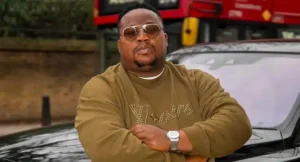
But beneath the flashy lifestyle and viral social media moments, another ambition has quietly been growing:
Politics.
And despite failing to secure a House of Representatives ticket during the recent APC primaries, the celebrity businessman says his political journey is far from over.
In fact, he now claims the defeat taught him one of the most important lessons in Nigerian politics — patience.
“People Mocked Me” — But CP Says He Learned Something Bigger
Speaking during an interview on Beat FM 99.9, Chief Priest admitted that many Nigerians mocked him online after his failed attempt to secure the APC ticket.
To critics, the loss appeared embarrassing.
Some questioned whether celebrity popularity could truly translate into political relevance.
Others dismissed the ambition entirely, arguing that Nigerian politics is far more brutal and complicated than social media influence.
But Chief Priest says the experience did not discourage him.
Instead, he believes it gave him a deeper understanding of how power is built in Nigeria.
Why Tinubu Became His Political Example
Perhaps the most striking part of his comments was his comparison with President Bola Tinubu.
According to Chief Priest, Tinubu’s political journey taught him that success in politics is often about timing, sacrifice and long-term strategy rather than immediate victory.
He pointed to how Tinubu supported Muhammadu Buhari for eight years before eventually becoming president himself.
To him, that was not weakness.
It was calculation.
And now, he says he is learning from the same model.
The message was clear: Losing once does not mean the political dream is over.
Nigerian Politics Is Becoming Celebrity Politics
Chief Priest’s political ambition also reflects a larger trend gradually reshaping Nigerian politics.
Celebrities, entertainers and influencers are increasingly entering spaces once dominated exclusively by career politicians.
From musicians to actors and online personalities, public visibility is becoming a new form of political capital.
But there is a difficult reality many of them eventually discover: Fame and political structure are not the same thing.
Winning elections in Nigeria still depends heavily on grassroots networks, elite alliances, financial structures and long-term political relationships.
That gap explains why many celebrity politicians attract attention online but struggle during real political contests.
Defeat As Rebranding?
Interestingly, Chief Priest appears determined to turn political disappointment into personal reinvention.
Rather than disappear after losing the primary, he quickly returned to entertainment, announcing the release of a new hit song only days later.
That move may reveal something important about modern celebrity culture: In today’s Nigeria, controversy, politics and entertainment increasingly feed each other.
A political defeat can still generate publicity.
And publicity itself remains valuable currency.
A Joke To Some, A Serious Plan To Others
Many Nigerians may still view Chief Priest’s political ambition as entertainment rather than serious ideology.
But dismissing celebrity politicians entirely may be risky.
Around the world, entertainers and media personalities have repeatedly transformed public fame into political influence.
The bigger question is whether Nigerian voters are prepared to separate charisma from competence.
Because in an age driven by social media visibility, political relevance is no longer controlled only by traditional structures.
The Real Lesson Behind Chief Priest’s Comments
Beyond the celebrity angle, Chief Priest’s remarks expose something deeper about Nigerian politics.
Defeat is rarely treated as final.
People Also Read: “Trump Ordered Us To Protect Nigerian Christians” — US Reveals Secret ISIS Operation
Politicians lose, defect, regroup, negotiate and return stronger years later.
That culture explains why many political actors see setbacks not as endings, but as temporary pauses inside a much longer game.
Chief Priest appears to understand that already.
And whether Nigerians take him seriously or not, one thing is becoming increasingly obvious: The line between entertainment and politics in Nigeria is disappearing faster than ever before.