

Standard Chartered has arranged a $2.33 billion syndicated financing package, and it actively supports Tanzania’s Standard Gauge Railway project, driving major infrastructure development across East Africa.
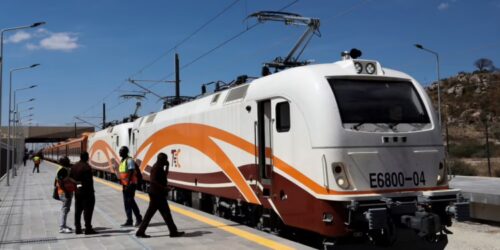
Standard Chartered Financing Deal
The bank confirmed the deal on Wednesday, and it marked clear progress in a major regional transport upgrade.
The funding supports Lots 3 and 4 of the railway, and these sections run between Makutupora and Isaka in Tanzania.
These sections form part of a wider plan, and it links Dar es Salaam to Mwanza through a modern rail corridor.
The project aims to improve freight movement, reduce costs, and boost logistics efficiency across the country.
The financing brings together export credit agencies, commercial banks, and development finance institutions, and they all contribute to the package.
Standard Chartered structured the deal and coordinated multiple international partners, and it closed the transaction successfully.
Yapi Merkezi will use the proceeds, and it will construct the designated railway sections.
China Civil Engineering Construction Corporation is delivering the Isaka to Mwanza section, and it leads the construction work there.
Standard Chartered also arranged a $559 million Sinosure-covered facility, and it supports the same section of the project.
In addition, the bank acted as a key coordinator for Tanzania’s Ministry of Finance, and it engaged international lenders throughout the process.
Rail Corridor Development
The railway will replace an older metre-gauge system, and it will create a faster and higher-capacity network.
It will improve passenger travel and cargo transport across Tanzania, and it will enhance reliability.
The project advances in phases, and it stretches from Dar es Salaam to Mwanza.
Once completed, it will strengthen trade links with Uganda, Rwanda, and the Democratic Republic of Congo, and it will deepen regional integration.
Read Also: Optimus Bank FY2025 Profit Soars 69.94% To ₦24.14Bn
Regional Trade Expansion
Previously, Standard Chartered arranged $1.46 billion in 2020, and it supported earlier railway sections.
This shows the bank’s continued involvement, and it reinforces its long-term commitment to Tanzania’s rail development.
Uganda plans to connect its rail network to Tanzania’s system, and it actively pushes this regional integration.
This connection will create a direct export route through Dar es Salaam port, and it will improve trade access.
The link could extend opportunities for landlocked central African countries, and it may boost exports.
Nigeria also develops a similar Kano–Maradi railway project, and it aims to improve regional connectivity.
However, delays continue to affect the project, even though funding remains in place.
Across Africa, governments prioritise rail infrastructure, and they aim to support trade and economic growth.
Finally, Tanzania’s railway continues to take shape, and it becomes a key transport backbone for East Africa.