

The Naira and Euro reflect two different global economic forces today.
Nigeria actively stabilises its currency after years of volatility and sharp swings.
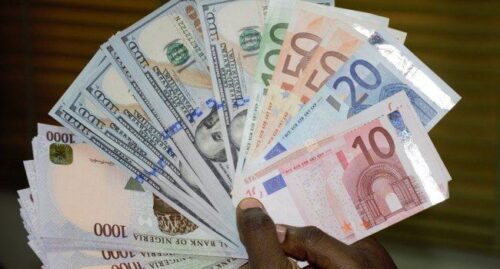
Naira Stabilisation Trend
The Naira now forms a softer floor as reforms and tighter policy take effect.
Recent data places the Naira at ₦1,582 per euro in official trading.
Traders now watch the ₦1,550 per euro level as the next potential target.
The Central Bank of Nigeria drives this stability through active market interventions.
It strengthens reserves, which reach multi-year highs in 2026.
It also narrows gaps between official and parallel exchange rates.
In addition, the bank maintains a 26.5 % Monetary Policy Rate to control inflation.
Furthermore, higher interest rates attract foreign portfolio investment into Nigeria.
Inflation rises to 15.38 % in March because fuel and transport costs increase.
Meanwhile, Middle East tensions push global energy prices higher.
The Dangote Refinery cuts Nigeria’s fuel import needs and supports the Naira.
As a result, foreign exchange demand falls and currency pressure eases.
Moreover, clearing FX backlogs boosts investor confidence significantly.
Overall, the Naira outlook against the Euro stays slightly positive but cautious.
However, future gains depend on reform consistency and stable oil prices.
Eurozone Growth Pressure
In contrast, Europe faces mounting economic and energy challenges.
Read Also: Illicit Alcohol Trade Drains ₦428bn From Nigeria Yearly, Warns SWAN DG
The Euro weakens after Germany lowers its economic growth forecast.
Germany now expects only 0.5 % growth in 2026.
Consequently, confidence in the wider Eurozone economy declines.
Energy insecurity continues to strain businesses and households across Europe.
The Strait of Hormuz closure drives oil and gas prices higher.
As a result, inflationary pressure rises across multiple European economies.
Meanwhile, geopolitical tensions in the Middle East unsettle global markets.
Donald Trump maintains pressure through continued blockade policies.
At the same time, Iran restricts maritime movement in key waterways.
Therefore, energy markets remain volatile and unpredictable.
The European Central Bank considers modest rate increases to control inflation.
However, it stays cautious because growth remains weak.
For now, the Euro remains in a wait-and-see phase.
Currency Outlook Divergence
Technically, the Euro shows short-term strength against the US dollar.
Still, underlying economic risks continue to weigh on its outlook.
Ultimately, Nigeria builds stability through reforms, while Europe absorbs external shocks.