

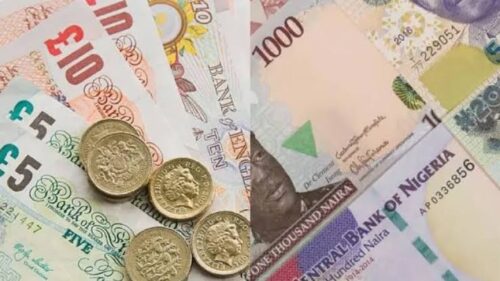
Mid-week, the Nigerian naira held steady at ₦1,844 to the British pound amid global uncertainty.
Moreover, the currency resisted slipping past ₦1,850, a psychological level that traders and investors monitor closely.
Naira Holds Ground
The Central Bank of Nigeria actively defended the naira against sudden market shocks when necessary.
Meanwhile, rising tensions in the Middle East, particularly involving Iran, unsettled global financial markets.
Global Pressures
Consequently, investors fled emerging-market currencies like the naira, seeking safer assets such as the US dollar.
However, the Central Bank used strong foreign reserves to maintain confidence among both local and international investors.
Additionally, a recent 50-basis-point policy rate cut reinforced belief that Nigeria’s inflation is slowing steadily.
Since the conflict began, the naira slightly weakened, yet investors continued buying local bonds and equities.
In contrast, other emerging markets suffered larger outflows as MSCI currency indexes approached steep monthly declines.
Sterling And Investor Confidence
At the same time, the British pound held up, outperforming the US dollar for three consecutive days.
Read Also: Nigerian Stocks Signal Overbought, Yet Bulls Keep Charging
GBP/USD edged higher to 1.3370 as traders anticipated that the US Federal Reserve would keep rates steady.
Meanwhile, rising UK energy costs forced the Bank of England to halt further interest rate cuts.
The BoE must balance inflation near 2% with slower growth and rising unemployment pressures, affecting sterling.
Importantly, Nigeria’s currency stability reflects proactive central bank measures, strong investor support, and domestic optimism.
In this volatile global environment, the naira’s performance reassures markets navigating multiple economic and geopolitical pressures.
Furthermore, traders continue monitoring foreign exchange developments closely for any shifts in investor sentiment.
Despite uncertainties abroad, the naira demonstrates resilience and investor confidence in Nigeria’s economic fundamentals consistently.