

Cash dominated Nigeria’s economy at the end of 2025, with Nigerians holding ₦5.4 trillion outside banks.
Moreover, total money in circulation reached ₦124.4 trillion, while overall currency climbed to ₦5.7 trillion by December.
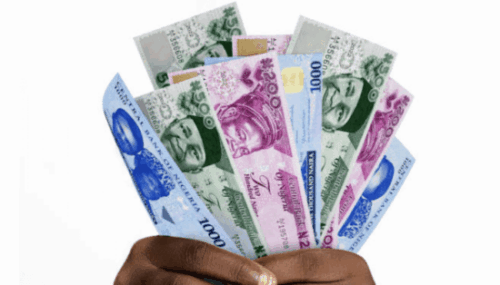
Cash Dominates Daily Life
Despite years of cashless policy and digital initiatives, most Nigerians still keep their money outside banks.
Analysts explain that the trend reflects both tradition and practical needs in areas with limited digital access.
Although December usually sees cash spikes, 2025 levels reached historically high amounts, surpassing all previous records.
This surge demonstrates that physical currency continues to play a key role in daily commerce and transactions.
Policy Shifts And Liquidity
In 2023, former CBN Governor Emefiele restricted cash during the naira redesign, triggering widespread public frustration.
Consequently, currency outside banks fell to just ₦792.1 billion, shocking the economy and disrupting daily activities.
Read Also: Nigeria’s Liquidity Expands To ₦124.4 Trillion By Year-End 2025
Under current Governor Yemi Cardoso, the CBN now manages liquidity rather than restricting cash, while actively promoting digital inclusion.
Furthermore, Nigeria’s agency banking sector, especially PoS operations, grew rapidly because abundant cash became widely available.
Thousands of small businesses and agents now rely on cash and PoS services to operate efficiently across the country.
Cash And Commerce
Meanwhile, PoS terminal prices surged due to inflation, foreign exchange pressures, and rising logistics costs.
Currently, entry-level PoS machines cost around ₦21,500, while advanced terminals sell for ₦62,000–₦85,000.
The CBN introduced geo-tagging and daily fines, which actively regulate and monitor cash distribution.
Ultimately, the growing use of cash reflects both economic necessity and the public’s continued trust in physical money.
Therefore, Nigeria’s cash surge highlights the tension between digitalisation goals and persistent public demand for currency.
Clearly, cash remains central to daily life, showing how deeply it shapes Nigeria’s economy and culture.