

The Federal Government has unveiled plans for an ambitious project that will break new ground in Africa—an underwater tunnel linking two of Nigeria’s most strategic highways.
On Wednesday in Lagos, the minister of works, David Umahi, led an inspection tour and announced the details.
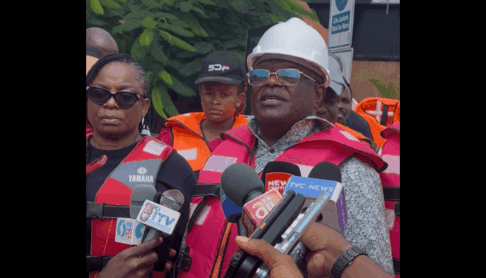
He explained that the tunnel would stretch 2.9 kilometres, starting from Ahmadu Bello Way, cutting through Snake Island, and extending towards Badagry.
He stated firmly, “This tunnel will run 2.9 kilometres beneath the water.
Once we complete it, it will stand as Africa’s first underwater tunnel.”
Public-Private Partnership Funding
To finance the project, the government will pursue a Public-Private Partnership.
Instead of relying on loans, Umahi emphasised that the ministry would release land around Snake Island and Badagry for investors to develop under a Build, Operate, and Transfer model.
Furthermore, he linked the project to a broader vision.
By connecting the Lagos-Calabar coastal highway with the Sokoto–Badagry corridor, the government intends to strengthen national transport routes while easing the heavy load on Lagos bridges.
Read Also: Global Military Spending Soars To Record $2.7 Trillion, Says UN Chief
Indigenous Contractors Empowered
In addition, Umahi clarified the new procurement policy.
From now on, expatriate firms cannot bid for projects below ₦20 billion.
With this shift, the government aims to give indigenous contractors more space to prove their capacity.
He stressed, “Expatriate firms will no longer handle jobs under ₦20 billion.
Indigenous contractors can manage projects worth billions and even trillions.”
Moving on, Umahi also issued a warning to contractors.
He urged them to cover binder courses promptly, explaining that delays weaken road quality and cause premature failures.
If contractors ignore this directive, the ministry will issue negative certificates and recover funds from their projects.
Through this plan, the government intends not only to drive innovation but also to empower local expertise while enforcing stricter accountability in infrastructure delivery.