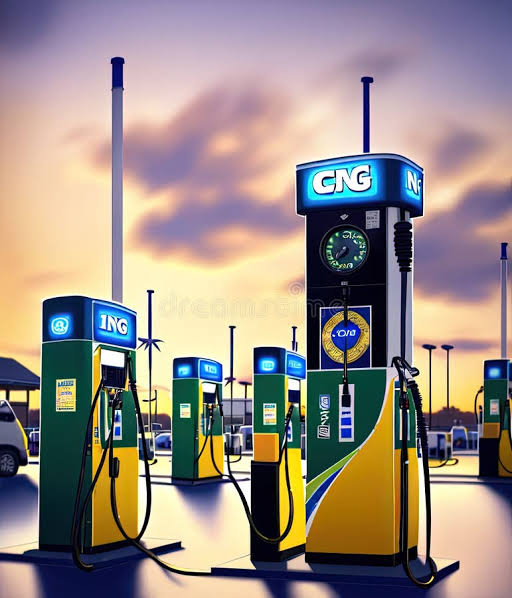

Nigeria is no stranger to grand promises that fizzle out before they take root. The latest chapter? Compressed Natural Gas (CNG) — once hailed as the “people’s fuel,” now looking more like a ticking time bomb.
The Federal Government’s announcement that CNG will not be subsidized has sent shockwaves across the country. For many drivers who invested huge sums in converting their vehicles, the news feels like betrayal. Instead of relief, they are now staring at higher prices, longer queues, and broken promises.
CNG was supposed to be Nigeria’s way out of the endless subsidy drama — cheaper, cleaner, and locally abundant. But the cracks are already showing, and if care is not taken, the much-celebrated transition may collapse before it even begins.
Here’s why:
1. Poor Infrastructure, Lofty Ambitions
Talk of CNG dominance sounds great on paper, but where are the filling stations? In major cities like Lagos, Abuja, and Port Harcourt, CNG outlets are still painfully scarce.
Drivers travel miles and wait hours just to refuel. Without a robust distribution network, CNG risks becoming an elite privilege, not a nationwide solution.
2. No Subsidy, No Safety Net
The government has been blunt: “There is no subsidy on CNG. What Nigerians are seeing in the market is the reality of supply and demand,” according to Ekperikpe Ekpo, Minister of State for Petroleum Resources (Gas).
That sounds like tough love — but in a country where petrol and diesel already cripple household incomes, leaving CNG entirely to market forces feels reckless. Without incentives, rebates, or tax relief, what’s the guarantee that CNG won’t follow the same inflationary spiral?
3. Broken Trust with Citizens
This might be the most dangerous factor of all.
Nigerians have been burned too many times: power sector reforms that delivered darkness, subsidy removals that fueled suffering, and promises of “palliatives” that vanished like smoke.
Also Read: Eid-ul-Mawlid: Why Nigerians Deserve More Public Holidays Than the Government Gives
Now, CNG is beginning to feel like another scam dressed up as reform. With public trust at rock bottom, even a workable plan could crash from sheer disbelief.
Renewed Uncertainty
CNG was sold as a bridge to Nigeria’s energy future, but the bridge already looks shaky. Poor infrastructure, zero subsidy support, and a credibility crisis could doom the project before it takes off.
For now, Nigerians are asking the same haunting question: did we just witness the birth — and death — of another government promise in record time?