

On this week’s episode of The Rundown, we asked whether INEC can guarantee credible elections in 2027 when artificial intelligence is making voter fraud and identity manipulation increasingly difficult to detect. The commission’s own numbers suggest the answer is not yet.
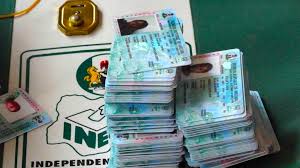
The scale is staggering. Of the 11,088,238 registration records harvested from the 2025/2026 Continuous Voter Registration exercise, INEC’s Automated Biometric Identification System flagged 1,545,052 for further examination . That is roughly one in seven registrations raising a red flag.
By the time the commission finished its clean-up, 1,608,660 records had been confirmed invalid and removed, alongside 873 records belonging to verified deceased voters . The combined figure: 1,609,553 records struck from the preliminary register.
The Number That Matters Most
But the number that should concern Nigerians most is not the total removed. It is the 268,000 cases that required further human adjudication after public complaints.
Of those, 217,722 were confirmed invalid and removed. Another 50,278 were cleared and retained . That means nearly 218,000 records were questionable enough to survive automated screening and only fell after Nigerians themselves raised objections.
The system caught some. The public caught the rest.
How It Happened
INEC’s Director of ICT, Dr Lawrence Bayode, was remarkably candid when he appeared on Arise Television. Some of the irregularities, he said, came from within.
“We have registration officers on the field. And these registration officers, they have login details to log into the system,” Bayode said. “Some of these registration officers, not all of them now, some of them across the states nationwide, they’ve done different things to bring these irregularities onto the register”.
Some of the photographs were AI-generated. Others were simply poor registrations. But all of them entered the database through authorised access .-11
Bayode described one method with chilling specificity: officials abused a special registration option designed for persons with disabilities who lack fingers, registering fictitious people without fingerprint data. The system allowed it because the special provision was meant to accommodate genuine disability.
“You can’t even say that to the commission now, because before you use this system, that system must send an OTP to your email or your phone number,” Bayode said. “So if anybody is using your login details, it means that you are conniving with that person”.
The commission has identified 54 personnel across 10 states as complicit. Disciplinary action, including possible prosecution, has been promised.
The Problem AI Creates
INEC has been careful to distinguish between entirely AI-generated photographs and genuine voter images enhanced by AI-powered phone applications. Bayode said legitimately registered voters would not be excluded solely because their photographs had been enhanced.
That distinction matters. But it also illustrates the difficulty: the same technology that improves a selfie can manufacture a ghost.
And the problem is not confined to photographs. During the Ekiti State governorship election in June, AI-generated images circulated showing fabricated scenes of voters queuing to sell their votes and exaggerated turnout. Experts later proved they were fake.
INEC Chairman Joash Amupitan has defended the use of AI, saying the commission is counting on it to strengthen credible elections. He has argued that artificial intelligence is not an enemy of democracy.
The evidence from this register clean-up suggests it is not quite an ally either. It is a tool — one that can cut both ways.
The Historical Problem the Clean-Up Did Not Solve
Perhaps the most troubling disclosure from INEC’s press conference was this: cleaning the 2025/2026 register does not solve the problem.
Amupitan warned that many of the duplicate registrations and suspicious photographs circulating on social media originated from records captured between 2011 and 2023, under different technologies and quality standards.
“The current National Register of Voters evolved through successive registration and Continuous Voter Registration exercises since 2011,” he said. “It therefore contains biometric and demographic data captured under different technologies, operational arrangements and quality standards”.
A nationwide revalidation exercise was planned for February 2026 but has been deferred until after the 2027 elections, following concerns about disenfranchisement.
So the historical irregularities remain, flagged but unresolved, in the register that will underpin the 2027 vote.
The Question of Trust
Obiageli Ezekwesili has argued that INEC cannot investigate itself. She has called for an independent Citizens’ Electoral Rescue Team to take custody of the register, conduct a forensic audit and publicly certify the final version before INEC adopts it.
“INEC cannot investigate INEC. Impossible,” she said. “The register of voters is the first ballot. If it is rigged, every ballot that follows is rigged before it is cast”.
INEC has insisted the preliminary register published online on October 26 was not the final document. The final Register of Voters is scheduled for publication on December 15, 2026.
Did You Miss? 15 Minutes to Triage, 30 to Stabilise: Can a New Bill Force Nigerian Hospitals to Save Lives?
The commission says it is strengthening controls: enhanced biometric capture, authentication and verification safeguards, and a new directive that photographs must be captured through an approved application rather than external webcams.
The Rundown Asked: Can Technology Protect the Vote?
This week on The Rundown, we posed the question directly: can INEC guarantee credible elections in 2027 when AI is making fraud harder to detect?
The answer emerging from the commission’s own data is uncomfortable. Technology caught 1.5 million flags. But it took public complaints to surface 268,000 more. And the people who introduced the irregularities had legitimate access to the system.
AI did not create this problem. It made it easier. And the deeper vulnerability — insiders with login credentials — is not something any algorithm can fix.
This article is tied to this week’s episode of The Rundown, where we examined INEC’s voter register alongside the Zamfara ambush, the emergency healthcare bill, the President’s revised borrowing request and the ADC court ruling. Watch the full episode on YouTube.