

In Nigeria today, insecurity no longer feels like an emergency.
It feels like background noise.
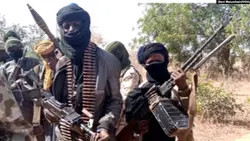
A headline announces another attack. A community is displaced. A road becomes unsafe. A region records new casualties. Nigerians sigh, shake their heads, and move on. No national shutdown. No sustained outrage. Not even collective reckoning.
And that is the most frightening development of all.
This year proved something deeply troubling: Nigeria has quietly normalised insecurity.
From Shock To Shrug
There was a time when violent incidents froze the nation. News would dominate conversations for days. Public officials rushed to respond. The nation mourned collectively.
Now, reactions are muted.
Insecurity has become routine—something Nigerians factor into daily planning. Which road is safe? What time should you travel? Which area should be avoided after dark? Survival strategies have replaced expectations of protection.
When danger becomes predictable, it stops being shocking.
And when it stops being shocking, it becomes acceptable.
Insecurity As A Permanent Condition
This year showed that insecurity is no longer treated as a temporary crisis to be solved, but as a permanent condition to be managed.
Government statements now focus on containment rather than resolution. “Relative calm.” “Under control.” “Isolated incidents.” These phrases suggest not victory, but accommodation.
The absence of clear timelines, benchmarks, or accountability signals something deeper: the system has adjusted to insecurity instead of defeating it.
The Geography Of Abandonment
One of the clearest signs of normalisation is how unevenly insecurity is treated across Nigeria.
Some regions dominate national attention. Others suffer quietly. Entire communities live with fear so consistently that their pain no longer registers as breaking news.
When insecurity becomes localized, it becomes easier to ignore. It becomes “their problem,” not a national emergency. This quiet abandonment is one of the year’s most damning revelations.
A nation that accepts insecurity in parts of its territory is already negotiating with failure.
Citizens Have Been Recast As Their Own Security
This year further exposed a troubling shift: Nigerians are increasingly responsible for their own safety.
Private security. Community vigilance. Informal protection networks. Travel avoidance. These are coping mechanisms, not solutions.
When citizens must constantly self-secure, the idea of the state as protector weakens. Trust erodes. Fear becomes personal, not political.
And when people stop expecting protection, power escapes scrutiny.
Political Noise, Strategic Silence
Insecurity still appears in political speeches—but often as rhetoric, not urgency.
This year showed how easily security concerns are overshadowed by political maneuvering, power consolidation, and elite negotiations. Insecurity becomes a talking point during elections and a footnote afterward.
Silence does not always mean ignorance. Sometimes, it means calculation.
The Media Fatigue Factor
Media coverage has not disappeared—but attention has thinned.
When insecurity is constant, stories struggle to compete with new crises. Editors rotate headlines. Audiences scroll past. Tragedy becomes repetitive.
This is not indifference—it is fatigue. And fatigue is exactly what allows insecurity to persist without consequence.
The Psychological Cost of Normalisation
Perhaps the most dangerous impact of normalized insecurity is psychological.
Fear reshapes behavior. It limits movement, ambition, investment, and trust. It narrows life. People stop dreaming long-term and focus on immediate safety.
A society living in constant alert mode cannot fully develop. This year made that painfully clear.
When Survival Replaces Citizenship
The final proof that insecurity has been normalised is this: citizenship is being replaced by survival.
People are less concerned with rights, accountability, or long-term policy—and more focused on getting through the day unharmed. When survival becomes the priority, civic pressure disappears.
Also Read: Georgia To Mandate Health Insurance For All Tourists Starting 2026
Power benefits. Accountability weakens. Reform stalls.
And insecurity quietly wins.
The Gradual Process
Nigeria did not wake up one day and decide to accept insecurity.
It happened gradually—through silence, fatigue, adaptation, and lowered expectations.
This year proved that the greatest danger is no longer just insecurity itself, but how comfortably the nation has learned to live with it.
A country that normalises insecurity is not at peace.
It is paused in fear.