

This week, the Naira wavered as the British Pound climbed toward ₦1,950/£ in markets.
At the official market, the Naira dipped to ₦1,935 and the CBN reported it closed at ₦1,931 on Wednesday.
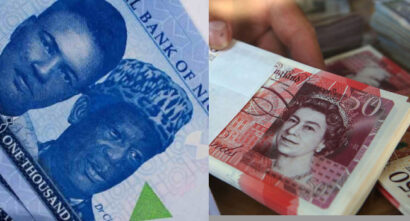
Meanwhile, intraday swings between ₦1,924 and ₦1,933 reflected traders’ caution amid rising holiday demand.
Naira Faces Holiday Pressure
At the unofficial market, retail demand kept the rate high, driven by travel, tuition, and imports.
Consequently, analysts expect the Pound-Naira pair could reach ₦1,975/£ by the end of the month.
Furthermore, some forecasts predict rates could climb above ₦2,000/£ if foreign exchange inflows remain tight.
Exports Bolster The Naira
Despite near-term pressures, Nigeria’s currency shows resilience thanks to export growth and economic diversification.
For instance, total exports jumped to ₦77.4 trillion in 2024, up from ₦36 trillion in 2023.
Read Also: Nigeria Stocks Rise 1.20% On DANGCEM Buying Boost
Non-oil exports, such as cocoa and ores, demonstrate Nigeria’s effort to reduce oil dependence.
Notably, cocoa earnings surged from $759 million to $2.6 billion, reflecting growing global demand.
Pound Strengthens On Policy Moves
Meanwhile, the British Pound strengthened after the UK government raised £26 billion in taxes through its budget.
Moreover, diverging monetary policies between the Bank of England and US Fed supported sterling gains.
Currently, sterling trades at 1.333 against the US dollar, marking its strongest month in months.
However, UK services PMI shows expansion, but slower activity and falling employment signal fragility.
Additionally, inflation eased to its lowest level since January 2021, supporting expectations of BoE cuts.
At the same time, the US dollar weakened as markets priced in Fed cuts through 2026, boosting sterling.
Therefore, traders view dips in sterling as buying opportunities while closely monitoring support levels.
Overall, the pound and naira reflect seasonal demand, global shifts, and local economic resilience.