
Nepal is experiencing its most turbulent period in decades as youth-led anti-corruption protests escalate across the country.
Triggered by a controversial social media ban, the demonstrations have quickly grown into a national movement demanding accountability, justice, and an end to corruption.
The fallout has been dramatic, shaking the political establishment and sparking widespread unrest.
Here are the major things the protests have caused in Nepal.
1. Resignation of the Prime Minister
The most immediate impact of the protests was the resignation of Prime Minister KP Sharma Oli.
Facing public outrage over the deaths of at least 22 people in violent clashes with police, Oli stepped down, saying his decision would “pave the way for a constitutional solution.”
His exit has left a leadership vacuum, with uncertainty about who will steer the country through the crisis.
2. Deadly Violence and Mass Casualties
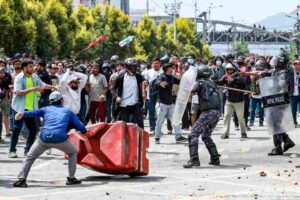
The protests turned violent as police clashed with demonstrators in Kathmandu and other cities.
Security forces used tear gas, batons, water cannons, rubber bullets, and even live ammunition against crowds.
At least 22 people have been killed and nearly 200 injured, including protesters and police officers.
Also, hospitals are overwhelmed with victims suffering from gunshot wounds and other injuries.
3. Attacks on Government and Political Buildings
Protesters have targeted symbols of political power, setting fire to the parliament building in Kathmandu.
Also, the headquarters of the Nepali Congress Party, and the home of former Prime Minister Sher Bahadur Deuba.
Other government buildings and the residences of several politicians have also been vandalised.
This signals the depth of public anger against the ruling elite.
4. A National Security Crisis
The protests have forced the Nepal Army onto the streets.
Army Chief General Ashok Raj Sigdel has accused protesters of exploiting the crisis to loot and destroy property.
He warning that security forces will take control if unrest continues.
The imposition of curfews around key government buildings highlights how the demonstrations have spiralled into a full-blown national security emergency.
5. Rise of Gen Z as a Political Force
The protests have revealed a generational shift in Nepal’s politics.
Young people, many identifying as Gen Z have mobilised in unprecedented numbers.
Students from colleges and universities have marched with books in hand, while even schoolchildren have joined demonstrations.
Also, their defiance of curfews and their use of social media as a mobilisation tool mark the arrival of a new political force.
6. Social Division Over Nepotism and Inequality
The movement has also fuelled the #NepoKids and #NepoBaby trends
The trends exposes the lavish lifestyles of politicians’ children compared with the struggles of ordinary Nepalis.
Viral videos showing the elite’s designer clothes, foreign trips, and luxury cars have become symbols of corruption and inequality.
People Also Read:Five Key Things To Know About Nepal’s Anti-Corruption Protests
Also, the protests have therefore deepened public resentment towards political privilege and nepotism.