
The hall in Lagos was filled with business leaders waiting for answers. When CBN Governor Olayemi Cardoso stepped forward, he spoke with calm confidence.
He assured them that Nigeria’s financial future was being rebuilt on stronger ground.
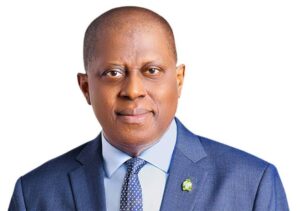
On a warm Saturday morning in Lagos, business leaders gathered at the European Business Chamber (Eurocham Nigeria) C-Level Forum.
The room was filled with cautious optimism, as many wondered what the future of Nigeria’s economy would look like.
Then, the governor of the Central Bank of Nigeria (CBN), Olayemi Cardoso, took the stage.
His words carried both reassurance and determination.
Cardoso spoke about the Central Bank’s vision.
He explained that Nigeria’s financial system was not just being protected but strengthened to face global challenges.
According to him, the ongoing bank recapitalisation programme was moving in the right direction.
It was, in his words, a process that would deliver stronger institutions, banks that could finance economic growth and survive external shocks.
He reminded the audience that reforms were already bearing fruit.
The naira, once under heavy pressure, was showing signs of stability.
Inflation was still high but had started to move downward, thanks to persistent policies.
“We will protect the stability that has been re-established in the financial system with the utmost zeal,” Cardoso said firmly.
Also Read: CBN Creates New Department To Fight Financial Crimes
Rebuilding Nigerians Financial Future
The CBN governor also addressed one of the biggest concerns in the room lending rates.
Many business leaders worry that high borrowing costs hold back investment.
Cardoso admitted that rates were high but assured that they would gradually fall as inflation dropped and markets became more efficient.
This, he promised, would lead to more affordable credit and better investment opportunities.
One of his key points was the recapitalisation directive.
By asking banks to raise their minimum capital base, the Central Bank was not just protecting deposits but also ensuring that banks could fund more diverse economic activities.
For Cardoso, this was a necessary step to make Nigerian banks strong enough to support growth on every level.
Beyond the banking halls, he highlighted other efforts: promoting financial inclusion, supporting the fintech sector, and using technology to fight poverty.
He stressed the importance of working closely with government agencies such as the Ministry of Finance and the Ministry of Trade and Industry.
Collaboration, he said, was the only way to secure long-term stability.
As the event came to a close, Eurocham Nigeria President Yann Gilbert praised the dialogue.
He reaffirmed the commitment of European businesses to invest in Nigeria, create jobs, and build lasting partnerships.
For many in the audience, Cardoso’s message was clear, Nigeria’s financial future was being carefully rebuilt, brick by brick.