

Eclipses are fascinating celestial events that remind us of the harmony in our solar system.
While both lunar and solar eclipses involve the alignment of the Sun, Earth, and Moon, they are very different in how they occur and how we see them.
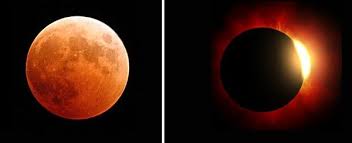
What is a Solar Eclipse?
A solar eclipse happens when the Moon comes between the Sun and the Earth. This blocks the Sun’s light from reaching parts of the Earth.
A solar eclipse only occurs during a new moon. There are different types total, partial, and annular depending on how much of the Sun is covered.
During a total solar eclipse, day briefly turns into night in the affected region.
What is a Lunar Eclipse?
A lunar eclipse happens when the Earth comes between the Sun and the Moon. In this case, the Earth blocks sunlight from reaching the Moon, and its shadow falls on the Moon.
A lunar eclipse only occurs during a full moon. Depending on the alignment, the eclipse may be partial, penumbral, or total.
During a total lunar eclipse, the Moon often appears red, earning the nickname “Blood Moon.”
Key Differences
Positioning: Lunar eclipse occurs when Earth blocks the Sun’s light from the Moon, while solar eclipse occurs when the Moon blocks the Sun’s light from Earth.
Frequency: Lunar eclipses can be seen by anyone on the night side of the Earth, while solar eclipses are visible only from specific locations along the eclipse path.
Safety: Watching a lunar eclipse is safe with the naked eye, but looking directly at a solar eclipse without protection can damage your eyes.
Also read: 3 Things To Know About Lunar Eclipse