
Long before the Senate gave it a nod, states like Lagos and Kaduna had begun carving out their own paths to power reform.
Now, with the Electricity Act (Amendment) Bill, 2025 advancing through the National Assembly, they may finally have the legal backing to go full throttle.
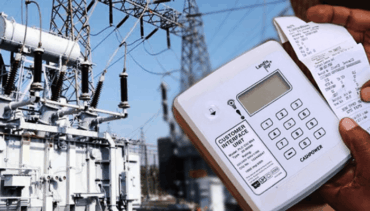
Senator Enyinnaya Abaribe, who sponsored the bill, intends to amend the 2023 Act to enable states to create their own electricity markets and regulatory bodies—an effort to fix long-standing local power deficits.
Federal Oversight Stays Firm
However, despite this bold ambition, the federal government still holds considerable power.
The Nigerian Electricity Regulatory Commission (NERC) continues to oversee the national grid, set technical standards, and enforce consumer regulations.
As a result, experts warn this dual authority could fuel confusion, overlapping mandates, and legal conflicts.
To address some of these issues, lawmakers introduced 28 new clauses.
For instance, the bill criminalises electricity infrastructure vandalism and encourages coordination between federal and state agencies.
Section 2(2) gives states the right to develop power policies and manage stations, but NERC retains control over all grid-connected operations.
Read Also: FAAN Defends ₦712bn Budget For Terminals, Skywall
Shared Governance, Uneven Future
To bridge potential conflicts, the bill creates the Forum of Electricity Regulators (FERs), which brings together NERC, state regulators, and relevant federal agencies.
This forum aims to align standards and settle disputes. Still, critics argue it might allow NERC to dominate the conversation.
Policy analyst Emeka Okpukpara strongly believes the bill could “create more confusion than clarity.”
He argues that while the bill grants states authority on paper, NERC may override their efforts in practice.
Meanwhile, the bill gives states 12 months to meet transition criteria, with a possible six-month extension.
If they fail, NERC will continue to regulate their electricity sectors.
Forward-looking states like Lagos and Kaduna are likely to benefit early, but others may struggle due to weak institutional capacity.
Ultimately, the bill promotes “managed federalism,” limiting true autonomy under the guise of reform.