

On this week’s episode of The Rundown, we asked a question every Nigerian with a phone has asked at some point: why am I paying for calls that never connect? The Senate has now asked the same question, and the answer is proving harder to pin down than the network itself.
The 30-Second Heist
It happens in the middle of an important call. You are explaining something, making a point, closing a deal. Then the line goes dead. You look at your screen. The call timer says 00:47. The airtime deduction says ₦50.
You dial again. It rings. It connects. It drops. Another ₦30 gone.
This is not a glitch. It is not a one-off. It is a daily experience for millions of Nigerians, and it has a name: substandard telecommunications service. But the Senate has given it another name: unjustified deduction.
The Motion That Named the Problem
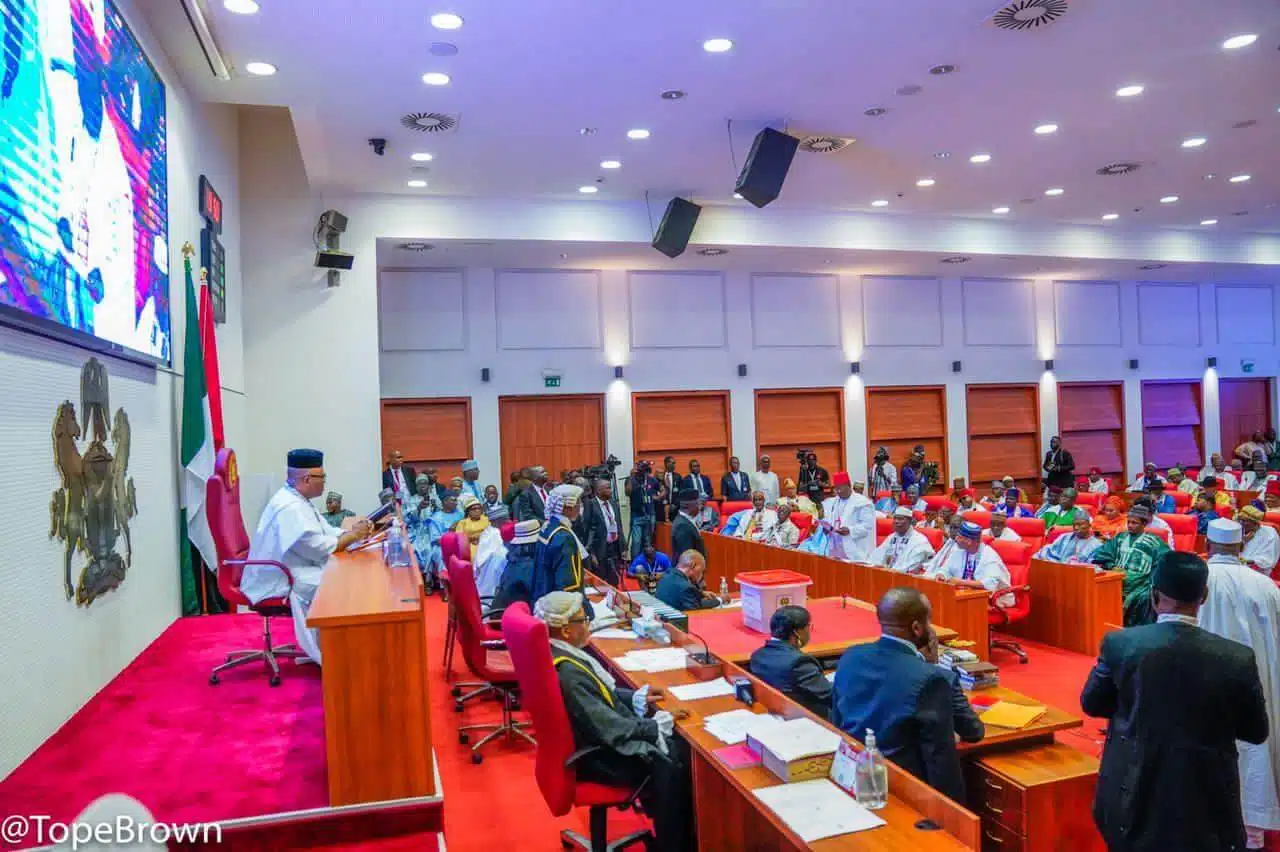
On Wednesday, November 11, 2026, the Nigerian Senate took up a motion sponsored by the Senate Chief Whip, Senator Mohammed Tahir Monguno of Borno North. Its title was long, but its target was precise: “Need to Curb Unjustified Deductions from Subscribers’ Airtime Resulting from Substandard Telecommunications Services through Robust Consumer Protection.”
The motion was presented by the Deputy Majority Leader, Senator Lola Ashiru of Kwara South. And what it described was a robbery in slow motion.
According to the Senate, subscribers “frequently experience failed call connections, abrupt disconnections, inaudible conversations and network interruptions, resulting in airtime deductions without effective communication.” They are “often compelled to make repeated calls to achieve successful connections, thereby incurring additional costs arising from network deficiencies beyond their control.”
Senator Ned Nwoko of Delta North, who seconded the motion, did not mince words. He described the situation as a straightforward consumer-protection crisis, pointing out the contrast between the quality of telephone services in Nigeria and the seamless connectivity experienced in other countries.
The Senate’s conclusion was blunt: “Payment for airtime is payment for a service and not merely an attempt to establish communication.”
In other words: if the call does not connect, you should not be charged. And if you are charged, you should be refunded.
The Sum of Small Thefts
The Senate did the math that millions of Nigerians have been doing in their heads for years. Individual deductions may seem small. A few naira here, a hundred naira there. But when aggregated across millions of subscribers, they translate into “substantial financial losses, particularly for low-income earners, traders, students and small business operators.”
For a market woman in Lagos who needs to call her supplier, a failed call is not an inconvenience. It is a lost sale. For a student in Kano trying to reach a lecturer, it is a missed deadline. For a small business owner in Aba, it is a customer who called someone else instead.
The Senate heard that, and it responded with a directive. The Committee on Communications, chaired by Senator Aliyu Ikra Bilbis of Zamfara Central, was mandated to summon the Nigerian Communications Commission and the operators—MTN, Airtel, Globacom and T2 Mobile—to investigate the complaints, assess the financial losses suffered by subscribers, and report back within four weeks.
Senate President Godswill Akpabio went further. He warned that if the explanations and proposed interventions failed to address the concerns, the Senate could escalate the matter to a Committee of the Whole for further legislative action. He blamed inadequate regulatory supervision for some of the avoidable losses, insisting that the NCC, the supervising minister and the operators must all provide answers.
The Regulator and the Operators Push Back
Here is where the story gets complicated.
The Association of Licensed Telecommunication Operators of Nigeria has argued that the NCC, not the Senate, should be the primary respondent on service quality. Engr. Gbenga Adebayo, chairman of ALTON, said he attended the Senate’s first invitation on behalf of operators, with the consent of the chief executives of the invited companies. He understood the exercise to be fact-finding, he said, but its outcome “appeared to take the form of a command-and-control approach.”
His argument is procedural but pointed: the NCC is the licensor. It holds second-by-second network performance data and information on operating constraints that are not public. “You cannot leave the regulator aside and summon the licensees,” he said in substance.
And then there is the court case. ALTON, MTN Nigeria, Airtel Networks, Globacom and EMTS, which runs 9mobile, filed suit FHC/ABJ/CS/2713/2026 at the Federal High Court in Abuja on November 4, 2026. The suit names the House of Representatives, its Speaker, its Clerk and the Inspector-General of Police, and asks the court to set aside the summonses and bar arrest warrants to enforce them.
The operators argue that Sections 88 and 89 of the 1999 Constitution limit legislative inquiries to purposes such as law-making and exposing corruption or waste of public funds, which they say private companies fall outside. They add that the Nigerian Communications Act and the NCC’s Quality of Service Regulations 2024 make the commission responsible for service standards.
The Senate’s investigation is not the same as the House’s probe, but the operators’ resistance has set the tone for both.
The Numbers Behind the Noise
The NCC’s own data gives the Senate’s concerns a quantitative backbone. In the first half of 2026 alone, the four major mobile network operators recorded 413,587 consumer complaints covering voice and data quality, billing disputes, data depletion, failed payment transactions and SIM-related issues.
Airtel Nigeria accounted for 228,992 of those complaints. MTN recorded 124,405. Globacom had 56,810. T2mobile logged 3,885.
The operators reported resolving 406,938 cases, a resolution rate of 98.38 per cent. But the sheer volume of complaints—and the persistence of the same categories year after year—suggests that resolution is not the same as satisfaction.
There is also the matter of compensation. The NCC’s compensation framework, which took effect in April 2026, mandates automatic airtime credits for subscribers in areas where operators fail to meet prescribed quality-of-service standards. MTN has already begun acting on it, with subscribers receiving SMS notifications of automatic airtime credits ranging from ₦20 to ₦1,436 for network deficiencies recorded between February and April 2026.
So the mechanism exists. The question is why it is not automatic, why it is not universal, and why the Senate felt compelled to intervene at all.
The Rundown Asked: Are Nigerians Getting a Fair Deal?
This week on The Rundown, we posed the question directly: if a call fails because of network problems, should the operator automatically refund the airtime?
However, the Senate’s answer is yes. The NCC’s framework says yes. The operators’ court filings suggest they would rather the regulator decide when and how.
But for the subscriber—the person who bought the airtime, dialled the number, and watched the credit disappear—the question is simpler. It is not about jurisdiction or constitutional limits or regulatory frameworks. It is about whether the service they paid for was delivered.
And for millions of Nigerians, the answer, every day, is no.
What Happens Next
Meanwhile, the Senate Committee on Communications has four weeks to report back. The court case will proceed. The NCC will continue to collect complaints and issue compensation credits that many subscribers may never notice.
Sadly, the deeper problem remains. Nigeria’s telecom operators have invested ₦2.53 trillion in network infrastructure in 2025, with a further ₦1.86 trillion earmarked for 2026. They have added and upgraded thousands of sites. Power availability at tower sites has improved. And yet the complaints keep coming.
The Senate’s motion is not the first attempt to address this. It may not be the last. But it has done something important: it has put a number on the losses, named the operators, and given the regulator a deadline.
Whether that translates into a refund for the market woman in Lagos, or a connected call for the student in Kano, is the question that will determine whether this is a real intervention or just another motion in a long line of them.
This article is tied to this week’s episode of The Rundown, where we examined the airtime problem alongside Lagos’s electricity crisis, the CNG bus fire, INEC’s voter register scandal, and the opposition’s internal battles ahead of 2027. Watch the full episode on YouTube.
