
Every now and then, a conversation resurfaces in Nigeria that refuses to die.
Not because it is new.
But because it is sensitive.
And few topics sit in that uncomfortable space like the question of who truly powers the Lagos economy.
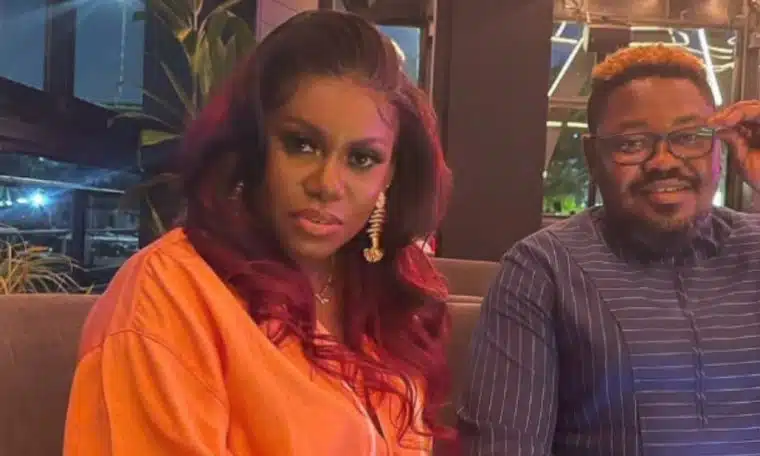
Recently, Nigerian rapper Tobechukwu Melvin Ejiofor, popularly known as Illbliss, stepped into that debate with a statement that has since sparked heated reactions online.
His claim was simple but loaded.
He suggested that the Igbo community plays a major role in sustaining Lagos’ commercial ecosystem, and that without their presence in trade and business, the city’s economy would look very different.
It was not just a cultural observation.
It was a national conversation starter.
“Imagine Lagos Without Igbo Traders”
Speaking during an interview on the Outside The Box podcast, Illbliss argued that Nigerians have become too comfortable with tribal and regional divisions despite living in one country.
But it was his reference to Lagos that caught attention.
He pointed out that many Igbo people are deeply embedded in commerce, retail, and informal trading sectors across the state.
And then came the controversial angle: What would Lagos look like if a significant portion of those traders were suddenly absent?
It is a question that sounds hypothetical.
But in Nigeria, even hypotheticals can ignite real tension.
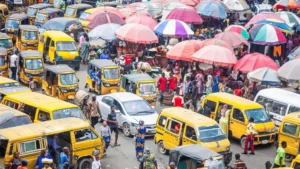
Lagos: A City Built on Migration and Movement
To understand the weight of Illbliss’s statement, one thing must be clear, Lagos has never been an “indigenous-only” economy.
From its earliest days as a coastal trade hub, the city has been shaped by migration.
Yoruba, Igbo, Hausa, and countless other groups have contributed to its transformation into Nigeria’s commercial capital.
Markets like Balogun, Alaba, Ladipo, and Oshodi are not defined by one ethnic identity.
They are defined by hustle, opportunity, and survival.
So when discussions arise about “who built Lagos,” the reality is far more complex than social media debates suggest.
The Igbo Presence in Commerce: Influence or Overstatement?
Illbliss’s comment reflects a widely acknowledged reality: the Igbo community has a strong presence in retail and trade across Lagos.
From electronics and spare parts to fashion, importation, and distribution networks, many Igbo entrepreneurs have built visible and influential business structures in the city.
But here is where the debate becomes complicated.
Does economic participation equal economic ownership?
Or does it simply reflect a broader Nigerian truth, that Lagos is a magnet for anyone willing to take risk?
Many argue that attributing Lagos’ economy to any single group oversimplifies a deeply interconnected system.
Supporters of Illbliss’s view say it is simply an uncomfortable truth being spoken aloud.
The Tribal Fault Line That Never Heals
What makes this conversation volatile is not economics.
It is identity.
Nigeria continues to struggle with ethnic suspicion disguised as political commentary.
Statements about “who contributes more” often quickly slide into “who belongs more.”
And that is where Illbliss’s warning becomes more important than his statistics.
He lamented that despite decades of coexistence, tribal and religious divisions still shape how Nigerians perceive one another.
In his words, the country still struggles with basic accommodation of difference.
Why Lagos Thrives
Beneath the controversy lies a more difficult question: Is Lagos successful because of one group — or because it is Nigeria’s shared economic survival space?
A closer look suggests the answer is neither simple nor emotional.
Lagos thrives because it absorbs ambition from across the country.
It is powered by transporters from the North, traders from the East, artisans from the West, and professionals from everywhere in between.
To isolate one group as the “engine” risks ignoring the structure that allows the engine to run in the first place.
When Identity Becomes an Economic Argument
Illbliss did not just make a cultural statement.
He touched a long-standing Nigerian sensitivity, the link between identity and opportunity.
In a country where land ownership, business influence, and political power are often viewed through ethnic lenses, even economic discussions quickly become political.
That is why reactions to his comment have been mixed.
Some see it as honesty.
Others see it as provocation.
And many see it as both.
Beyond the Debate: What Nigeria Keeps Avoiding
Perhaps the most important takeaway is not about Lagos or any single ethnic group.
It is about Nigeria’s difficulty in separating contribution from competition.
You May Like: FG Poll: 83.4% Of Nigerians Favour Restricting Children’s Social Media Access
Instead of asking “who owns the economy,” a more productive question might be: How do we make every Nigerian feel they belong in every part of Nigeria?
Because as long as identity remains a barrier to acceptance, conversations like this will keep returning — louder each time.
At The End Of The Day
Illbliss may have spoken about Igbo traders in Lagos, but the reaction reveals something deeper than economics.
It exposes a nation still negotiating its unity in everyday life.
And until that question is resolved, Lagos will remain more than a city.
It will remain a mirror, reflecting both Nigeria’s diversity and its divisions.